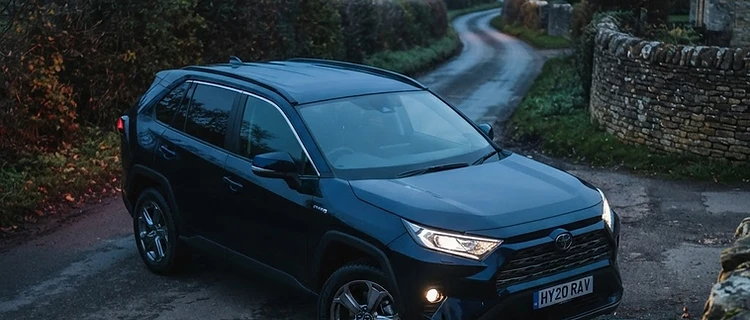
Used Toyota RAV4 Hybrid (2019-Present) Buyer’s Guide UK: Reliability, Cablegate and Theft Risks
Introduction
The current Toyota RAV4 Hybrid has become a default choice for sensible family buyers: roomy, easy to drive, cheap enough to run and backed by Toyota’s strong hybrid reputation. As a used buy, though, there are three issues you need to understand before handing over any money: the model’s excellent overall reliability, the so-called Cablegate corrosion problem on some AWD-i cars, and the rising risk of CAN-bus injection theft.
This guide covers what matters to a UK buyer in 2026: which years are safest, what to inspect, what a used RAV4 Hybrid really costs to own, and whether it is still a smart buy.
Why the RAV4 Hybrid is still such a strong used SUV
Mechanically, the 2.5-litre self-charging hybrid is one of the better proven systems in this class. It suits British driving well too. Around town it is smooth and efficient; on A-roads it feels strong enough without chasing revs. Real-world economy is usually a genuine selling point: expect roughly mid-40s mpg in mixed use, with 50mpg-plus possible in gentler urban running. Long motorway slogs tend to pull it down.
Cabin space is another plus. Adults fit comfortably in the back, the boot is usefully square and visibility is decent by modern SUV standards. If you want a dependable family car rather than something remotely sporty, the RAV4 makes a lot of sense.
The key choice is front-wheel drive or AWD-i. The latter gives extra traction and stronger resale appeal, but it is also the version linked to Cablegate because of the rear motor cable layout.
RAV4 Cablegate explained UK
Cablegate is the issue that dominates any used Toyota RAV4 Hybrid buyer’s guide in the UK. On early AWD-i cars, the high-voltage cable connector for the rear electric motor could trap moisture and road salt. Over time, corrosion could build up, triggering warnings and potentially expensive repairs.
Toyota updated the connector design around mid-2022, adding improved drainage. That makes late-2022 cars onwards the sweet spot for many buyers. If you are looking at a 2019 to early-2022 AWD-i, evidence matters more than mileage alone. Ask whether the cable has been inspected, whether any corrosion was noted and whether any warranty or goodwill work has been carried out.
If the car has a full Toyota service history, that is especially valuable because it helps preserve Toyota Relax cover: every qualifying Toyota dealer service adds 12 months or 10,000 miles of warranty, up to 10 years or 100,000 miles.
Theft risk: why security now matters
The other big UK-specific concern is theft. Some RAV4s are targeted through CAN-bus injection, where thieves access wiring through the front corner of the car, often behind the wheel arch or headlamp area, then electronically unlock and start it.
That does not make the RAV4 a bad car, but it does mean security should be part of your buying decision. If the seller has fitted a Ghost immobiliser, a Disklok-style steering lock or Toyota’s own loom protection plates, that is a meaningful plus. Also inspect the front wheel arch liners, bumper edges and headlamp fixings for signs of previous tampering.
Common Faults and Known Issues
The RAV4 Hybrid is generally robust, but these are the main issues I would focus on:
- High-voltage cable corrosion on AWD-i models: the big one. Look for hybrid system warnings, stored fault codes or corrosion history. Out of warranty, this is typically a four-figure repair, but exact UK costs vary.
- Theft-related damage: even if the car was not stolen, attempted CAN-bus access can leave damaged trim, wiring or poor panel fit around the front wing and headlamp area.
- Weak 12V battery: a tired auxiliary battery can cause odd warning messages, failure to “boot up” cleanly or intermittent electrical glitches.
- Tyre and brake wear: the RAV4 is not light. Cheap mismatched tyres, inner-edge wear or shuddering brakes suggest neglected maintenance or hard use.
- Infotainment age on early cars: not a fault as such, but earlier systems feel dated next to late-2022/2023 cars with the larger Smart Connect setup fitted to many UK examples.
Buying Advice
If you want the lowest-risk used RAV4 Hybrid, buy late-2022 onwards. Those cars are most likely to have the revised cable design and often get the improved infotainment too.
The bargain option is a well-priced 2019-2022 front-wheel-drive car. It avoids the rear motor cable issue entirely and is slightly simpler. For many UK buyers, especially those staying on tarmac, it is the smarter buy.
I would be more cautious with an early AWD-i car that has patchy history, has been serviced outside the Toyota network from new, or has no paperwork relating to cable inspections. High mileage alone is not a deal-breaker; poor documentation is.
If you are cross-shopping family SUVs, it is also worth reading our Used Kia Sportage (2021-Present) Buyer’s Guide: Common Faults, Reliability and GPF Issues for a useful point of comparison.
Inspection Checklist
Before you buy, check these basics:
- Confirm whether the car is FWD or AWD-i.
- For AWD-i, ask directly about high-voltage cable inspections, corrosion reports or replacement history.
- Check for a full Toyota service history if Toyota Relax warranty matters to you.
- Ask for any hybrid health check or diagnostic printout if available.
- Inspect front wheel arch liners, bumper corners and headlamp areas for theft-attempt damage.
- On test drive, make sure there are no warning lights, no drivetrain shunt and no unusual vibration under acceleration.
- Check tyre brand, wear pattern and matching axle pairs.
- Make sure both keys are present; replacing smart keys is not cheap.
Ownership Costs
Running costs are usually a RAV4 strength. Fuel economy is good for a family SUV of this size, especially in town. Servicing is typically straightforward, and dealer maintenance carries extra value because it can keep Toyota Relax warranty alive.
Road tax depends on registration date and annual rate changes, so check the exact figure before buying rather than relying on old adverts. Insurance is not usually bargain-basement because the RAV4 is desirable and theft risk has pushed some premiums upward.
The big financial swing factor is not fuel or servicing; it is whether an AWD-i car has a clean cable history and whether the car has strong enough provenance to keep warranty support on side.
Frequently Asked Questions
What is Cablegate on the Toyota RAV4 Hybrid?
It is corrosion affecting the rear motor high-voltage cable connector on some early AWD-i cars, mainly 2019 to early 2022 examples.
Is the Toyota RAV4 Hybrid reliable after 100,000 miles?
Usually yes, provided it has been serviced properly and any cable-related concerns have been checked on AWD-i versions.
What is the best year for a used Toyota RAV4 Hybrid in the UK?
Late-2022 onwards is the sweet spot because of the revised cable design and newer infotainment on many cars.
How can I reduce theft risk?
A steering lock, an aftermarket immobiliser such as Ghost and Toyota loom protection hardware are all worth considering.
Does Toyota Relax apply to used cars?
Yes, if the car meets the criteria and is serviced at an authorised Toyota dealer, up to 10 years old or 100,000 miles.
Summary
So, is a used Toyota RAV4 Hybrid worth it in 2026? Yes, with caveats. It is still one of the most convincing used family SUVs in the UK: practical, efficient and usually very dependable. But you should buy with your eyes open.
My pick is a late-2022 or newer car, ideally with a full Toyota history. If budget matters, a front-wheel-drive version is an underrated way to avoid the main Cablegate worry. Early AWD-i cars can still be good buys, but only when the paperwork is strong.
Should You Get a Professional Vehicle Report?
If you have found a RAV4 and want a second pair of eyes before buying, MyCarPilot offers a Professional Vehicle Report for £2.99 as a one-off payment. It is built by automotive engineers, uses specialist AI and UK model data, and comes with a 30-day Buying Companion for follow-up questions. For first-time buyers, or anyone nervous about cable history, theft risk or spec differences, it is a sensible low-cost check. You can also browse the wider FAQ if you want more detail before committing.
Frequently Asked Questions
About this guide: Produced by the MyCarPilot Engineering Team using UK market data, manufacturer technical bulletins and common owner-reported fault patterns. This is general buying guidance and does not replace a professional mechanical inspection.
Get Your Professional Vehicle Report
Before you travel to see any car, get the full picture. MyCarPilot analyses the documents and details you provide, cross-references them with UK model and market data, and tells you what is wrong, what it will cost, what to pay and what to inspect. All for a single payment of £14.99.
Start Your Vehicle ReportRelated Articles


Used Honda CR-V (Mk4, 2012–2018) Buyer’s Guide: Reliability, i-DTEC Diesel DPF Issues and Common Faults

Used Kia Picanto (JA, 2017–2023) Buyer’s Guide: Reliability, AMT Gearbox Quirks and Common Electrical Faults