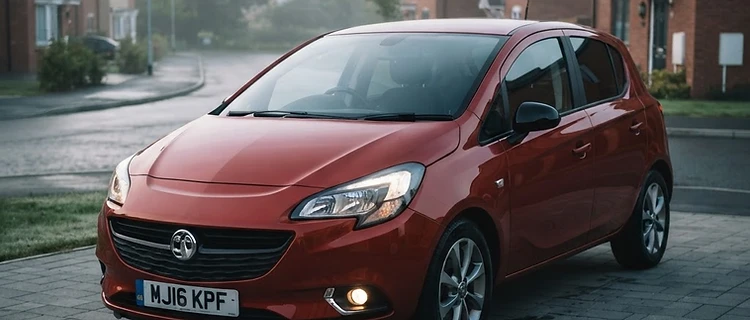
Used Vauxhall Corsa E (2014–2019) Buyer’s Guide: Reliability, IntelliLink Faults and Common Issues
Introduction
The Vauxhall Corsa E is one of the UK's default used superminis: easy to insure, easy to park and usually cheap to repair. That does not mean every example is a safe buy. Early IntelliLink glitches, coil-pack failures and steering column wear can turn a cheap Corsa into a false economy. This guide explains what matters on a used Corsa E, which engines to choose and what to check before money changes hands.
Where the Corsa E still makes sense
Although sold as a new model in 2014, the Corsa E is heavily related to the older Corsa D. That is not all bad news. It means parts supply is strong, independent garages know them well and most routine jobs are straightforward. The cabin is smarter than the older car, the ride is pliant and five-door models are practical enough for everyday use.
It is not the sharpest car in the class. A Fiesta is better to drive, as covered in our Used Ford Fiesta (Mk7/Mk8, 2008–2017) Buyer’s Guide: Reliability, EcoBoost Wet-Belt Issues and Common Faults. But if your priorities are low running costs, cheap tyres and simple petrol power, the Corsa still makes sense.
Best engines and gearboxes
For most buyers, the best engine for a used Vauxhall Corsa E is the naturally aspirated 1.4 petrol, in 75hp or 90hp form. It is not quick, but it is generally the most forgiving and suits town use well. These engines do need regular spark plug and coil-pack checks, and neglected cars can develop a rough idle or misfire.
The 1.0-litre three-cylinder turbo is the nicer engine on the road. It is quieter, stronger in the mid-range and better on faster A-road runs. The trade-off is that it is more sensitive to missed oil changes. A rattly cold start on any petrol Corsa E deserves attention, because most petrol engines in the range use a timing chain rather than a belt.
Manual gearboxes are the safe choice. The Easytronic automated manual can feel jerky even when healthy, and worn clutch actuators make matters worse. If you are looking for a dependable first car, a manual 1.4 is the sweet spot.
Cabin, ride and IntelliLink
The Corsa E feels grown-up enough inside, especially in SE and SRi trims, and it rides British roads better than some firmer rivals. Higher-spec cars with IntelliLink R3.0 or R4.0 look more modern and add useful connectivity, but this is also one of the model's best-known weak spots.
Early systems can freeze, reboot or fail to shut down properly, which may flatten the battery overnight. A dealer-applied software update often fixes it, so ask whether the car has had a Vauxhall Corsa E IntelliLink software update. Damp carpets or a musty smell should also put you on alert: some cars suffer water ingress into the front footwells.
Common Faults and Known Issues
- IntelliLink faults: frozen screens, failed Bluetooth pairing and battery drain are common on early cars. A software update may solve it; if not, diagnostic time and unit repairs can add up quickly.
- 1.4 petrol misfire: coil packs and plugs are a routine weakness. Symptoms include hesitation, rough idle and an engine warning light. Typical independent-garage cost is often around £100 to £200 fitted.
- Timing chain wear: most petrol Corsas use a chain. If oil changes have been skipped, you may hear a rattle on cold starts. Repair costs can run into many hundreds of pounds.
- Steering column problems: clunks, stiffness or poor self-centring can point to column or motor wear. A proper fix is rarely cheap; budget £400 to £700 depending on parts.
- Easytronic gearbox faults: shunting take-up, warning lights and very slow shifts are common complaints. If it is jerky on the test drive, walk away.
- Water ingress: wet front carpets, condensation and electrical oddities can come from blocked drains or failing seals.
Buying Advice
The safest used Corsa E is a standard, unmodified 1.4 petrol manual with full service history and evidence of annual oil changes. A stamped book is useful, but invoices are better. Look for proof of spark plugs, coil packs, battery replacement and any infotainment software work.
Be careful with cheap first-car examples wearing mismatched tyres, scuffed alloys and aftermarket stereos. They are often the cars that have missed maintenance. If you need more punch, the 1.0T is worth having, but only if the history is strong. If ULEZ or other clean-air charges matter, check the V5C for Euro 6 compliance rather than assuming.
Inspection Checklist
- Start the engine from cold and listen for chain rattle or a misfire.
- Check that no warning lights stay on after start-up.
- Test the IntelliLink screen, Bluetooth, USB and reversing camera if fitted.
- Turn the steering at low speed and check for clunks, heaviness or poor self-centring.
- On Easytronic cars, drive in stop-start traffic and feel for shunting or hesitation.
- Lift the mats and check front footwells and the boot well for damp.
- Check for two keys, locking wheel nut, service invoices and a recent battery.
Ownership Costs
Running costs are usually one of the Corsa E's strengths. Expect roughly 38 to 45mpg in mixed driving from the 1.4 petrol, with the 1.0T capable of similar or slightly better if driven gently. Insurance groups are usually low on smaller petrol cars, which is why the model remains popular with younger drivers.
Road tax depends on exact registration date and CO2 output, so check the specific car before buying. Routine servicing at an independent garage is typically £180 to £300 a year, excluding wear items.
Frequently Asked Questions
What are the most common problems with a used Vauxhall Corsa E?
IntelliLink glitches, 1.4 coil-pack failures, steering column wear, water ingress and jerky Easytronic operation are the issues most often reported by UK owners.
Is the Vauxhall Corsa E a reliable first car?
It can be, mainly because parts are cheap and insurance is usually low. Reliability is average rather than outstanding, so service history matters.
Which Corsa E engine is the most reliable?
The 1.4 naturally aspirated petrol is usually the safest bet. It is simple and durable if serviced properly.
Does the Corsa E have a timing belt or chain?
Most petrol engines in the Corsa E range use a timing chain. Neglected cars can develop chain rattle on cold start.
How do you fix the IntelliLink battery drain issue?
On early R3.0 systems, a dealer software update is the usual cure, often referred to as version 109 or later. Always ask for proof that the update has been done.
Summary
A used Vauxhall Corsa E can still be a sensible buy in the UK, especially as a 1.4 petrol manual with a full history. It is cheap to run and easy to live with, but it is not trouble-free. Prioritise condition, avoid rough Easytronic cars and do not ignore infotainment or steering faults.
Should You Get a Professional Vehicle Report?
If you are close to buying, a Professional Vehicle Report from MyCarPilot costs £14.99 as a one-off. It is built around UK model data and helps flag known issues, value risks and background concerns before you commit. It also includes a 30-day Buying Companion for follow-up questions. If you want more detail on how it works, see the FAQ.
Frequently Asked Questions
About this guide: Produced by the MyCarPilot Engineering Team using UK market data, manufacturer technical bulletins and common owner-reported fault patterns. This is general buying guidance and does not replace a professional mechanical inspection.
Get Your Professional Vehicle Report
Before you travel to see any car, get the full picture. MyCarPilot analyses the documents and details you provide, cross-references them with UK model and market data, and tells you what is wrong, what it will cost, what to pay and what to inspect. All for a single payment of £14.99.
Start Your Vehicle ReportRelated Articles


Used Honda CR-V (Mk4, 2012–2018) Buyer’s Guide: Reliability, i-DTEC Diesel DPF Issues and Common Faults

Used Kia Picanto (JA, 2017–2023) Buyer’s Guide: Reliability, AMT Gearbox Quirks and Common Electrical Faults