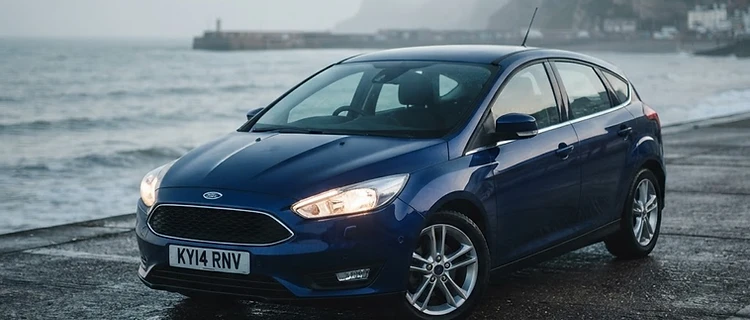
Used Ford Focus Mk3 Buyer's Guide: Reliability, EcoBoost Wet Belt and PowerShift Issues
Introduction
The Mk3 Ford Focus is still one of the smartest used family hatchbacks in the UK. It steers better than a Vauxhall Astra, usually costs less than a Volkswagen Golf Mk7, and it earned a five-star Euro NCAP rating when new. The catch is that some versions are far safer bets than others.
This guide explains which engines to target, why the 1.0 EcoBoost's 'wet belt' matters, what to know about the PowerShift automatic, and how to spot a good car from a money pit.
Which Ford Focus Mk3 should you buy?
For most private buyers, the safest all-round choice is a manual petrol. Early 1.6 Ti-VCT cars are simple by modern standards and generally less risky than the 1.0 EcoBoost if you want stress-free ownership. If you prefer a facelift car from 2014 onwards, a manual 1.5 EcoBoost can be a good compromise between performance and economy, but only with strong history.
Diesels still make sense if you do regular motorway mileage. A 1.5 TDCi or 1.6 TDCi manual can be economical and long-lived, but short urban trips can mean DPF and EGR trouble.
As a rule, buy on condition and paperwork, not badge or trim. A high-mileage Focus with impeccable servicing is often a better buy than a low-mileage car with missed services, cheap tyres and vague history.
EcoBoost and PowerShift: the two big decisions
The headline issue is the 1.0 EcoBoost. It is punchy and efficient, but its timing belt runs in oil. In UK specialist circles, this is the engine that creates the most anxiety. If the wrong oil has been used, or servicing has been stretched, the belt can degrade, contaminate the oil system and, in the worst case, destroy the engine.
Ford's original interval was widely quoted as 10 years or 150,000 miles, but many UK independents now advise replacing the wet belt far earlier: roughly every 6 to 8 years or 60,000 to 80,000 miles. If a seller cannot prove the correct oil and regular servicing, walk away or budget for the job immediately.
The other major choice is gearbox. The PowerShift dual-clutch automatic can be smooth when healthy, but the Mk3 Focus has a reputation for shuddering, hesitation, jerky pull-away and expensive clutch or control-unit faults. A manual gearbox is usually the wiser long-term bet.
Common Faults and Known Issues
- 1.0 EcoBoost wet belt: biggest risk on petrol cars. There may be no obvious warning until it is advanced. A preventive replacement can cost roughly £700 to £1,200+, depending on engine and specialist.
- EcoBoost coolant leaks: check for dropping coolant level, stains around hoses or housing, and any overheating history. Repairs vary widely, but simple leaks can be £100 to £350.
- PowerShift problems: look for shudder, delayed drive, warning messages or a clunky low-speed change. Clutch pack or mechatronic work can easily run to £1,500 to £2,500+.
- Rear suspension bush wear: common on higher-mileage cars. Symptoms include knocks, vague rear-end feel and uneven tyre wear. Budget around £250 to £450.
- Diesel DPF/EGR issues: mostly on cars used for short trips. Warning lights, limp mode and poor regeneration are typical signs.
- Electrical niggles: SYNC freezes, parking sensor faults, Bluetooth drop-outs and occasional central locking glitches are all reported. Usually irritating rather than terminal, but diagnosis can take time.
Buying Advice
A used Focus Mk3 can still be a very sensible buy, but specification matters.
Prioritise:
- full or near-full service history
- evidence of correct oil on 1.0 EcoBoost cars
- invoices for wet belt replacement where age or mileage suggests it should have been done
- a manual gearbox unless you specifically want to risk-assess a PowerShift car
- matching tyres from known brands, which often tells you how the car has been maintained
Be cautious with:
- cheap 1.0 EcoBoosts with patchy history
- any PowerShift car that feels hesitant on the test drive
- diesels that have lived a short-trip town life
- modified ST-Line or Zetec S style cars with hard use signs
Inspection Checklist
Before you buy, check these basics:
- Start from cold. Listen for rattles and watch for warning lights.
- Inspect coolant level and look for staining around hoses and the expansion tank.
- On a 1.0 EcoBoost, ask exactly when it was serviced and which oil was used.
- On PowerShift cars, try repeated stop-start driving, hill starts and slow manoeuvres.
- Check for suspension knocks over rough roads.
- Make sure SYNC, Bluetooth, parking sensors, windows and air conditioning all work.
- Look at tyre wear across all four corners; uneven wear can point to bush or alignment issues.
- Confirm VIN, service book, invoices and MOT history all line up.
Ownership Costs
Running costs are generally reasonable. Real-world economy is usually around 40-50mpg for the 1.0 EcoBoost, mid-30s to low-40s for older 1.6 petrols, and 55-65mpg for the 1.5/1.6 TDCi on a run. Exact figures depend heavily on route and wheel size.
VED varies by emissions and registration date, so check the individual car. Insurance is usually modest on smaller petrols, which helps first-time buyers. Routine servicing at an independent garage is rarely painful, but major jobs are the issue: wet belt work, diesel emissions repairs and PowerShift faults can wipe out any bargain purchase price.
Frequently Asked Questions
Is the Ford Focus 1.0 EcoBoost reliable?
It can be, but only if servicing has been done on time with the correct oil. The wet belt is the main concern.
Should I avoid the PowerShift automatic?
Many buyers do. A good one can drive well, but the manual is usually the lower-risk choice.
When should the wet belt be changed?
Ford's original guidance was long, but many UK specialists now advise around 6-8 years or 60,000-80,000 miles.
What are the most common faults?
Wet belt wear, coolant leaks, PowerShift shudder, rear suspension bush wear, and SYNC or parking sensor glitches.
Is a high-mileage Focus Mk3 worth buying?
Yes, if history is excellent. A well-maintained 120,000-mile manual can be a better bet than a neglected 60,000-mile car.
Summary
The used Ford Focus Mk3 still makes sense in 2026: it is practical, good to drive and cheap to buy in a crowded market. The best examples are manual cars with strong paperwork. If you want the least drama, a simple petrol manual is the safest route. If you want a 1.0 EcoBoost, buy only with evidence of correct servicing and belt planning. If you want an automatic, go in with your eyes open.
If you are also comparing newer family cars, our guides to the Used Kia Sportage (2021-Present) Buyer's Guide: Common Faults, Reliability and GPF Issues and Used Toyota RAV4 Hybrid (2019-Present) Buyer's Guide UK: Reliability, Cablegate and Theft Risks may help.
Should You Get a Professional Vehicle Report?
If you are about to leave a deposit on a Focus, a quick sense-check is worthwhile. MyCarPilot is the UK's independent vehicle buying intelligence platform, built by automotive engineers and powered by specialist AI cross-referenced with UK model and market data. A Professional Vehicle Report costs £2.99 as a one-off payment and includes a 30-day Buying Companion for follow-up questions. For general queries about how it works, see the FAQ.
Frequently Asked Questions
About this guide: Produced by the MyCarPilot Engineering Team using UK market data, manufacturer technical bulletins and common owner-reported fault patterns. This is general buying guidance and does not replace a professional mechanical inspection.
Get Your Professional Vehicle Report
Before you travel to see any car, get the full picture. MyCarPilot analyses the documents and details you provide, cross-references them with UK model and market data, and tells you what is wrong, what it will cost, what to pay and what to inspect. All for a single payment of £14.99.
Start Your Vehicle ReportRelated Articles


Used Honda CR-V (Mk4, 2012–2018) Buyer’s Guide: Reliability, i-DTEC Diesel DPF Issues and Common Faults

Used Kia Picanto (JA, 2017–2023) Buyer’s Guide: Reliability, AMT Gearbox Quirks and Common Electrical Faults