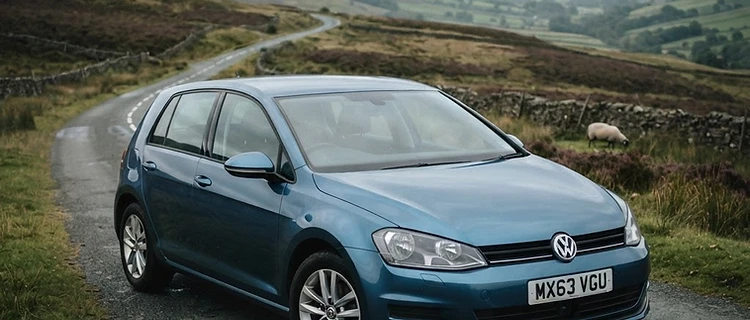
Used Volkswagen Golf Mk7 (2012–2020) Buyer’s Guide: Reliability, Water Pump Leaks and DSG Faults
Introduction
The Mk7 Golf is widely seen as the sweet spot of modern Volkswagen ownership: smarter than a Mk6, less software-led than a Mk8, and still one of the best all-round family hatchbacks on the used market. Based on the MQB platform, it mixes solid road manners, strong refinement and a huge choice of petrol, diesel and performance models.
For UK buyers, though, the big questions are simple: is a used VW Golf Mk7 reliable, which engines are worth having, and how worried should you be about water pump leaks or DSG faults? This guide covers the known trouble spots, likely ownership costs and what to inspect before you commit. If you are comparing rivals, our Used Ford Focus Mk3 Buyer's Guide: Reliability, EcoBoost Wet Belt and PowerShift Issues is also worth a read.
Engines, gearboxes and the best picks
The standout petrol for most buyers is the 1.4 TSI 150 with ACT. It is punchy, smooth and capable of excellent real-world economy if driven sensibly. It is the best all-rounder in the range, though a full service history matters because neglected turbocharged petrol engines rarely age well.
If you cover serious motorway miles, the 2.0 TDI 150 remains the sensible choice. It suits the Golf’s relaxed character, pulls well and tends to be the best fit for high-mileage drivers. Late Euro 6 cars are more future-proof for ULEZ-style clean-air rules, but diesel buyers should still make sure the car’s use matches the engine: repeated short trips are not ideal.
The 1.0 TSI is adequate rather than exciting, while the 1.6 TDI can be economical but feels less effortless than the 2.0 TDI. GTI, GTD and R models are desirable, but condition matters more than badge. A poorly maintained GTI will cost more than a carefully kept 1.4 TSI ever will.
On gearboxes, the manual is the safer bet. DSG can be excellent when healthy, but not all versions are equal. The 6-speed wet-clutch DSG, fitted to higher-torque models such as many 2.0 TDIs and GTIs, is generally the stronger unit if serviced every 40,000 miles. The 7-speed dry-clutch DSG used with some lower-output engines has a less reassuring record for mechatronics and clutch-pack issues.
What the Mk7 gets right on reliability
By class standards, the Golf Mk7 is still a strong used buy. Cabin quality is usually good, corrosion is not a major talking point, and the car feels robust in a way many newer rivals do not. That helps explain why many specialists regard it as more dependable than the Mk8.
That said, reliability depends heavily on specification and maintenance. A simple manual 1.4 TSI or well-serviced 2.0 TDI is a safer long-term bet than a neglected DSG car with patchy history. Cars with 4Motion, such as some estates and the R, add the Haldex system; it is effective, but it needs proper servicing rather than being treated as sealed for life.
Mileage alone should not scare you. A high-mileage Golf with documented servicing, regular oil changes and evidence of preventative work can be a better prospect than a low-mileage example used only for short urban trips.
Common Faults and Known Issues
The headline fault is the water pump and thermostat housing leak. This is one of the best-known Golf Mk7 common problems in the UK, especially on TSI engines. Look for coolant loss, a sweet smell after driving, low coolant warnings or pink residue around the pump area. Ignore it and overheating can follow. Repair cost varies by engine and labour rate, but it is usually a several-hundred-pound job rather than a minor fix.
Next is the DSG gearbox. Warning signs include jerky take-up, hesitation when selecting drive, clunky low-speed shifts or gearbox warning lights. Mechatronics faults can become expensive quickly; clutch-pack wear on dry-clutch cars is another risk. A smooth test drive from cold is essential, and proof of DSG servicing is a must on wet-clutch versions.
Other known issues include:
- Infotainment faults, especially MIB2 screen freezing or non-responsive touch inputs.
- Rear suspension bush wear, which can show up as knocks, vague rear-end movement or uneven tyre wear.
- EGR/DPF issues on diesels used mainly in town.
- ACT hesitancy on some 1.4 TSI cars, often felt as a slight transition shudder rather than a major fault.
- Haldex neglect on 4Motion models, where missed oil changes can shorten component life.
For diesel models, the cambelt change interval is crucial. Volkswagen UK typically advises 5 years or 140,000 miles, whichever comes first, on many TDI engines, though plenty of independent specialists prefer a shorter time-based interval. If there is no documentary proof, budget to do it.
Buying Advice
The best used Volkswagen Golf Mk7 buyer’s guide advice is simple: buy on history, not just trim or engine. A stamped book is not enough on its own; look for invoices showing coolant-system work, DSG servicing, brake-fluid changes and, on diesels, cambelt replacement where due.
A good spec helps resale, but avoid being blinded by toys. SE, Match and GT trims often make the most sense. Estates are excellent value and more practical than many small SUVs, especially if you are also considering something like our Used Nissan Qashqai J11 Buyer’s Guide.
Avoid cars with unexplained coolant loss, inconsistent gearbox behaviour, mismatched premium tyres on performance models, or obvious evidence of deferred maintenance. A modified GTI or R is not automatically a bad car, but it deserves extra caution.
Inspection Checklist
- Check coolant level and look for stains around the water pump/thermostat area.
- Start from cold and listen for rattles, uneven idle or warning lights.
- On DSG cars, ensure smooth pull-away and clean shifts when cold and hot.
- Verify DSG service history where applicable.
- On TDI models, confirm cambelt replacement by age and mileage.
- Test infotainment, Bluetooth, parking sensors and climate control.
- Inspect inner tyre wear and listen for suspension knocks.
- On 4Motion cars, ask for Haldex service evidence.
- Make sure all recalls and software updates have been completed.
Ownership Costs
The Golf Mk7 is not the cheapest hatchback to maintain, but it is usually manageable if bought well. The 1.4 TSI can return strong economy; many owners see comfortably over 40mpg in mixed use. The 2.0 TDI is better for long runs and can do more, but diesel-specific maintenance can cancel out some savings if the car is used badly.
Insurance varies sharply by engine and trim. A 1.0 TSI or 1.4 TSI is generally reasonable; GTI, GTD and R models are a different story. Servicing at an independent specialist is usually sensible value. Budget for higher routine costs on DSG, 4Motion and performance variants. For broader help on reports, data sources and our process, see the FAQ.
Frequently Asked Questions
What are the most common problems with a used VW Golf Mk7?
Water pump and thermostat housing leaks, DSG mechatronics faults, infotainment glitches and rear suspension bush wear are the issues seen most often.
Is the VW Golf Mk7 more reliable than the Mk8?
Many owners and specialists think so. The Mk7 has fewer complaints about software and user-interface problems.
When should the cambelt be changed on a Golf Mk7?
On many TDI models, Volkswagen UK recommends 5 years or 140,000 miles, whichever comes first. If there is no proof, budget to replace it.
Which is the best engine for a used Golf Mk7?
For most buyers, the 1.4 TSI 150 ACT is the best petrol. For regular motorway mileage, the 2.0 TDI 150 is the pick.
Is the Golf Mk7 DSG gearbox reliable?
The 6-speed wet-clutch DSG is usually the better bet if serviced on time. The 7-speed dry-clutch DSG has a weaker reputation.
Summary
A good Golf Mk7 still feels like a class benchmark. It is refined, practical and, in the right specification, dependable enough to recommend. The safest used choices are well-maintained manual cars, or DSG examples with impeccable service history. Watch closely for the known coolant leak issue, be strict on gearbox behaviour, and do not ignore cambelt timing on diesels.
Should You Get a Professional Vehicle Report?
If you have found a promising Golf, a Professional Vehicle Report from MyCarPilot can help you sanity-check the purchase before you hand over the money. It costs £14.99 as a one-off payment and combines model-specific risk points, market context and follow-up support through a 30-day Buying Companion. For a car with known weak spots such as water pumps, DSGs and diesel timing-belt schedules, that extra layer can be money well spent.
Frequently Asked Questions
About this guide: Produced by the MyCarPilot Engineering Team using UK market data, manufacturer technical bulletins and common owner-reported fault patterns. This is general buying guidance and does not replace a professional mechanical inspection.
Get Your Professional Vehicle Report
Before you travel to see any car, get the full picture. MyCarPilot analyses the documents and details you provide, cross-references them with UK model and market data, and tells you what is wrong, what it will cost, what to pay and what to inspect. All for a single payment of £14.99.
Start Your Vehicle ReportRelated Articles


Used Honda CR-V (Mk4, 2012–2018) Buyer’s Guide: Reliability, i-DTEC Diesel DPF Issues and Common Faults


Used Kia Picanto (JA, 2017–2023) Buyer’s Guide: Reliability, AMT Gearbox Quirks and Common Electrical Faults