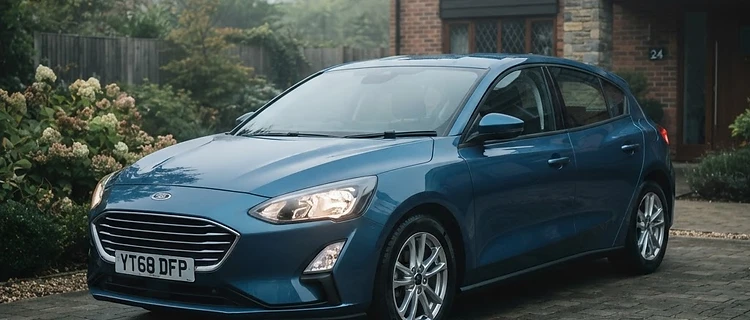
Used Ford Focus Mk4 (2018–2023) Buyer’s Guide: Reliability, 1.0 EcoBoost Wet Belt Issues and Common Faults
Introduction
The Mk4 Ford Focus is one of the sharpest family hatchbacks of its era: roomy enough for daily life, genuinely good to drive, and easy to find on the used market. But if you are researching used Ford Focus Mk4 reliability, there is one issue you cannot ignore: the 1.0 EcoBoost’s oil-lubricated timing belt, better known as the wet belt.
This guide covers Ford Focus 2018-2023 buyer's guide essentials: which engines and gearboxes make most sense, the Ford Focus Mk4 common problems worth checking, and how to separate a well-kept car from one that could become expensive.
Is the Ford Focus Mk4 reliable?
Broadly, yes. The Mk4 Focus is a competent, mature car from Ford Motor Company, and many examples cover high mileages without major drama. Cabin wear is usually decent, chassis components hold up reasonably well on UK roads, and the manual gearboxes are generally strong.
Where reliability becomes more conditional is servicing. On petrol cars, especially the 1.0-litre 1.0 EcoBoost Engine, maintenance history matters more than badge reputation. Missed oil changes, the wrong oil grade, or vague servicing invoices should ring alarm bells.
If you are comparing rivals, the Focus sits somewhere between the dependable simplicity of a Toyota and the more fault-prone end of some turbocharged family hatchbacks. Buyers also looking at German alternatives may want to read our Used Volkswagen Golf Mk7 (2012–2020) Buyer’s Guide: Reliability, Water Pump Leaks, and DSG Faults.
Engines, gearboxes and the wet belt question
The engine most UK buyers will encounter is the 1.0 EcoBoost petrol. It suits the Focus better than some critics suggest, but only if it has been maintained precisely. The key concern is the 1.0 EcoBoost wet belt issues story. The timing belt runs in oil, which reduces friction and noise, but it also means belt life depends heavily on correct lubricant quality and change intervals.
If the wrong oil is used, or changes are stretched, the belt material can degrade. In the worst cases, debris contaminates the lubrication system and can lead to serious engine damage. That is why a stamped book alone is not enough; you want invoices showing the correct Ford-spec oil was used.
As for the Ford Focus 1.0 EcoBoost timing belt replacement interval, published schedules and workshop advice can vary by engine code and model year, so do not rely on hearsay. Verify the exact interval for the car you are viewing with Ford documentation or a dealer using the registration or VIN.
Manual gearboxes are the safe bet. Shift quality should be light and positive, with no crunching into second or reverse. On automatics, buyers often ask about Ford Focus Mk4 gearbox faults. The good news is that this generation is generally less troublesome than older Ford applications associated with the Powershift name. Still, any automatic should engage smoothly, pull away cleanly and have evidence of fluid servicing where required. Hesitation, flaring revs or thumps into gear are reasons to walk away.
Cabin tech, electrical niggles and real-world durability
The Mk4 introduced a more modern cabin, but tech can be a weak point. Ford Focus Mk4 SYNC 3 infotainment problems are among the most commonly reported irritations rather than true deal-breakers. Watch for screen freezes, slow startup, Bluetooth pairing trouble, failed navigation loading and intermittent reversing camera glitches.
Electrical gremlins also crop up occasionally: parking sensors misbehaving, warning lights that appear without an obvious fault, or battery-related issues after periods of low use. None of this is unusual in a modern family hatchback, but repeated faults on a seller’s “perfectly fine” car deserve scepticism.
Suspension and steering usually stand up well, though cars used hard over poor roads may develop knocks from drop links or bushes. ST-Line models on larger wheels can feel more vulnerable to tyre and alignment wear, so inspect the inner tyre shoulders carefully.
Common Faults and Known Issues
- 1.0 EcoBoost wet belt degradation: poor servicing is the big risk. Symptoms can include unusual engine noise, oil pressure warnings or evidence of contaminated oil. Repairs can run from a preventive belt job into four figures; engine damage will cost far more.
- Infotainment glitches: frozen Ford SYNC 3 screen, Bluetooth dropouts, laggy menus. A software update may cure it; replacement hardware is costlier.
- Electrical faults: random warning lights, parking sensor faults, weak battery behaviour, stop-start not working.
- Automatic gearbox issues: rough shifting, delayed engagement or shuddering on poorly maintained cars. Diagnosis costs vary widely, so avoid any car that does not drive cleanly.
- Suspension wear: knocks over bumps, uneven tyre wear, vague steering feel. Usually not catastrophic, but it helps in negotiation.
- Air-con weakness: not unique to the Focus, but worth checking on a warm day. Re-gassing is minor; compressor or condenser faults are not.
For broader context on modern turbo hatchback issues, our Used Honda Civic (Mk10 FK/FC, 2017–2022) Buyer’s Guide: Reliability, 1.0 VTEC Turbo Wet Belt Issues and Air-Con Faults is a useful comparison.
Buying Advice
The best used Focus Mk4 is not necessarily the newest one; it is the one with the clearest maintenance trail. Full service history is essential on a 1.0 EcoBoost. Ideally, look for annual oil changes with itemised invoices, not just long-interval servicing.
If you cover big miles, be cautious with diesel unless your driving suits it. As with many modern diesels, repeated short trips can create DPF headaches. Manual petrol models are the simplest all-round choice for most private buyers.
Also check the MOT history through the UK MOT Test database. Repeated advisories for tyres, suspension or brakes can reveal an owner who has run the car on a budget. The SMMT’s market data consistently shows the Focus as a strong fleet and retail seller, which means there are plenty about; you do not need to settle for a poor one.
Inspection Checklist
- Confirm full service history and ask for oil-spec invoices on 1.0 EcoBoost cars.
- Start from cold and listen for rattles, uneven idle or warning lights.
- Check the SYNC 3 screen, Bluetooth, sat-nav, DAB, USB and reversing camera.
- On the test drive, make sure the clutch bites cleanly and the manual shift is smooth.
- On automatics, look for seamless take-up and no jolts or hesitation.
- Inspect tyres for uneven wear, especially on ST-Line models.
- Check for suspension knocks over speed bumps and poor surfaces.
- Test air conditioning properly, not just that the fan blows.
- Review MOT history for recurring advisories.
If you want an extra layer of reassurance, MyCarPilot offers a data-led Professional Vehicle Report for £14.99, with a 30-day Buying Companion for follow-up questions. It is a sensible step if a car looks promising but the history is not perfectly clear.
Ownership Costs
Fuel economy depends on engine and use, but the 1.0 EcoBoost can be reasonably efficient in mixed driving if driven gently. Insurance is usually competitive for mainstream trims, though ST-Line versions may cost more. Servicing is generally affordable by class standards, but this is not a car to maintain on the cheap. Budget properly for quality oil, timely servicing and, where applicable, automatic gearbox maintenance. Road tax varies by registration date and original list price, so check the specific car rather than assuming.
Frequently Asked Questions
Is the Ford Focus Mk4 reliable?
Generally yes, but only if it has been serviced correctly. The 1.0 EcoBoost is especially sensitive to maintenance quality.
What are the common problems with the Ford Focus Mk4?
The most common concerns are infotainment glitches, minor electrical faults, suspension wear and wet belt-related risk on 1.0 EcoBoost models.
What is the wet belt issue on the Ford Focus 1.0 EcoBoost?
It uses a timing belt running in oil. Missed oil changes or incorrect oil can cause premature belt degradation and, in severe cases, engine damage.
Should I buy a manual or automatic Ford Focus Mk4?
For most used buyers, manual is the lower-risk option. Automatics can be fine, but only if they shift smoothly and have been maintained properly.
What should I check when buying a used Ford Focus Mk4?
Focus on service history, cold-start behaviour, infotainment function, gearbox smoothness, tyre wear, suspension noises and MOT history.
For more buying-process help, see the FAQ.
Summary
So, is the Ford Focus Mk4 reliable? In the round, yes: it is one of the better family hatchbacks to drive and live with, and a good used example still makes plenty of sense. But it is not a car to buy casually.
The headline is simple. A well-documented manual 1.0 EcoBoost can be a smart purchase. A poorly serviced one, especially with patchy oil history, is a risk not worth taking. Be choosy, verify the maintenance record, and do not ignore small warning signs.
Should You Get a Professional Vehicle Report?
If you are down to a shortlist, a Professional Vehicle Report is a sensible final check. For £14.99, MyCarPilot combines specialist AI with UK model and market data, built by automotive engineers, and includes a 30-day Buying Companion for follow-up questions. It will not replace a physical inspection, but it can help you spot patterns, red flags and the right questions to ask before you commit.
Frequently Asked Questions
About this guide: Produced by the MyCarPilot Engineering Team using UK market data, manufacturer technical bulletins and common owner-reported fault patterns. This is general buying guidance and does not replace a professional mechanical inspection.
Get Your Professional Vehicle Report
Before you travel to see any car, get the full picture. MyCarPilot analyses the documents and details you provide, cross-references them with UK model and market data, and tells you what is wrong, what it will cost, what to pay and what to inspect. All for a single payment of £14.99.
Start Your Vehicle ReportRelated Articles


Used Volkswagen Golf Mk7 (2012–2020) Buyer’s Guide: Reliability, Water Pump Leaks, and DSG Faults


Used Nissan Qashqai (J11, 2014–2021) Buyer’s Guide: Reliability, 1.2 DIG-T Engine Issues and CVT Gearbox Faults