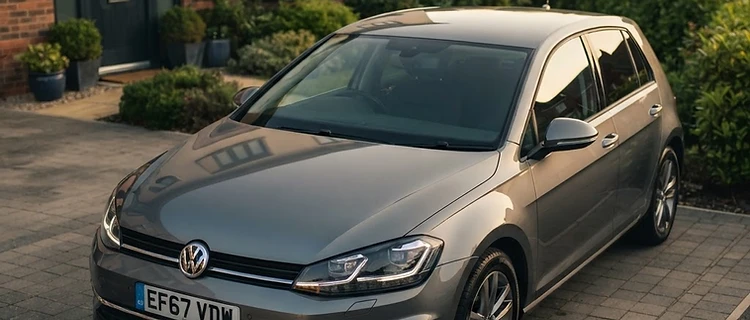
Used Volkswagen Golf Mk7 (2012–2020) Buyer’s Guide: Reliability, Water Pump Leaks, and DSG Faults
Introduction
The Volkswagen Golf Mk7 is one of the easiest used family hatchbacks to recommend. It is quieter, more grown-up and generally more robust than many rivals, which is why so many UK buyers ask: is the VW Golf Mk7 reliable? The short answer is yes, broadly, but not blindly.
If you are buying a used VW Golf Mk7, the big-ticket concerns are well known: coolant leaks from the water pump and thermostat housing, DSG transmission problems on neglected automatics, and the odd electrical glitch. Get those areas right and a Mk7 can still feel like a very smart buy.
Used Volkswagen Golf Mk7 reliability: the big picture
In day-to-day use, the Mk7 is a solid car. Cabin quality lasts well, rust protection is good, and most engines and gearboxes cope well with mileage if maintained properly. It is also a clear step on from the older Used Volkswagen Golf Mk6 (2008–2013) Buyer’s Guide: Reliability, TSI Timing Chain Issues and DSG Gearbox Faults.
The best cars tend to be those with full service history, evidence of coolant system repairs where needed, and documented gearbox servicing on DSG models. A cared-for 1.4 TSI or later 1.5 TSI can be a very usable all-rounder. The 2.0 TDI suits high-mileage drivers, but only if its emissions equipment has not been neglected.
As ever with Volkswagen Group products, condition matters more than badge appeal. A cheap example with patchy history can become expensive quickly.
Engines, gearboxes and which versions make most sense
For many buyers, the sweet spot is a 1.4 TSI petrol with a manual gearbox. It offers decent performance, sensible running costs and avoids some of the potential expense tied to an automatic. If you want a newer facelift car, the 1.5 TSI is worth a look, though some owners have reported low-speed hesitation on certain examples.
If you are researching VW Golf Mk7 1.4 TSI engine problems, the main concern is usually not the core engine itself but the cooling system attached to it. Oil consumption is not a defining Mk7 weakness in the way it was on some older VW petrols, but any used example still needs checking from cold and at operating temperature.
On gearboxes, the manual is the safer ownership bet. Clutches can wear, especially on town-driven cars, but repairs are usually more predictable than DSG faults. That matters if you are weighing up Golf Mk7 DSG vs manual reliability.
The DSG is excellent when healthy: quick, smooth and well suited to the Golf. But service history is everything. Wet-clutch DSG units, typically on higher-torque engines, need oil and filter changes every 40,000 miles. Skip that and you raise the risk of expensive mechatronic or clutch-pack trouble. This is not unique to the Golf; our Used Volkswagen Polo (Mk5 Facelift, 2014–2017) Buyer’s Guide: Reliability, 1.2 TSI Timing Issues and DSG Gearbox Faults covers similar Volkswagen Group themes.
Common Faults and Known Issues
Here are the main VW Golf Mk7 common problems UK buyers should know about.
Water pump and thermostat housing leaks
This is the headline issue. On various petrol engines, the combined water pump and thermostat housing can leak coolant. Symptoms include a dropping coolant level, pink residue around the engine bay, a sweet smell after driving, or the engine taking longer than expected to stabilise at temperature. Repair costs vary by engine and labour rate, but independent specialists often quote several hundred pounds rather than a minor bill.
DSG gearbox faults
The major Golf Mk7 DSG gearbox issues involve hesitant pull-away, shuddering, warning lights, harsh shifts or failure to select gears cleanly. A tired mechatronic unit is the expensive scenario. Costs can range from a fluid service and software update to a four-figure repair if major components are needed.
Infotainment and electrical glitches
Touchscreen freezes, Bluetooth pairing trouble and intermittent parking sensor faults do crop up. Usually these are irritations rather than deal-breakers, but make sure every screen, button, speaker and driver aid works before you commit.
Suspension wear
Cars used hard on rough roads can develop knocks from worn drop links, bushes or top mounts. None is unusual at age and mileage, but they are useful bargaining points.
Diesel emissions hardware
On 2.0 TDI cars used mainly for short runs, DPF trouble is possible. Check for warning lights, lumpy running or fans running after shutdown.
Buying Advice
So, what to check when buying a used Golf Mk7?
First, buy on history. A stamped book is helpful, but itemised invoices are better. You want proof of correct oil servicing, coolant-system repairs if already done, and DSG servicing at the right intervals.
Second, avoid cars with unexplained coolant loss. A seller saying “they all do that” is not a diagnosis. Likewise, treat any DSG hesitation as a warning until proven otherwise.
Third, prioritise specification sensibly. SE and Match trims often make more sense than bargain-basement S cars, but condition matters more than heated seats or larger alloys.
If you are also comparing family hatchbacks, it is worth reading our Used Honda Civic (Mk10 FK/FC, 2017–2022) Buyer’s Guide: Reliability, 1.0 VTEC Turbo Wet Belt Issues and Air-Con Faults and Used BMW 3 Series (F30, 2012–2019) Buyer’s Guide: Reliability, N47/B47 Timing Chain Issues and xDrive Faults if your budget stretches further.
Inspection Checklist
- Check coolant level when cold, then inspect for fresh residue around the water pump area.
- Confirm the engine reaches normal temperature and stays there.
- On DSG cars, test repeated low-speed pull-aways, reverse manoeuvres and stop-start traffic behaviour.
- Listen for suspension knocks over speed humps and broken surfaces.
- Check all infotainment functions, Bluetooth, climate control and parking sensors.
- Inspect tyres for even wear; mismatch can hint at penny-pinching maintenance.
- Look for damp carpets or condensation inside, especially after rain.
- Verify service history, MOT advisories and recall completion.
Ownership Costs
Running costs are reasonable by class standards. Real-world fuel economy depends heavily on engine choice and use, so it is best not to quote one figure across the range. Smaller petrols can be economical on mixed driving, while diesels suit motorway mileage.
Road tax varies because the Mk7 spans different registration years and CO2 bands. Insurance is generally sensible for mainstream trims, though GTD, GTI and R models sit much higher.
Servicing is usually affordable at a good independent Volkswagen specialist. Budget extra for DSG servicing every 40,000 miles where applicable, and keep a reserve for cooling-system repairs.
Frequently Asked Questions
Is the VW Golf Mk7 a reliable used car?
Generally, yes. The Mk7 is one of the more dependable hatchbacks of its era, but buyers should pay close attention to water pump leaks and DSG condition.
What are the most common problems with the VW Golf Mk7?
The main issues are water pump or thermostat housing leaks, DSG mechatronic faults, and occasional infotainment glitches.
Should I buy a manual or DSG Golf Mk7?
A manual is usually cheaper to maintain and lower risk long term. A DSG is excellent if it has been serviced properly and drives smoothly.
How often should the DSG gearbox be serviced on a Golf Mk7?
Wet-clutch DSG gearboxes typically need an oil and filter service every 40,000 miles. Missing this is a common cause of later trouble.
What should I look for during a test drive of a used Golf Mk7?
Watch for DSG shuddering or hesitation, check the coolant level before and after the drive, and make sure the engine reaches temperature normally.
Summary
The Mk7 Golf deserves its strong reputation. In the right spec, with the right history, it is refined, practical and usually dependable. But this is not a car to buy casually. The smart money checks carefully for Golf Mk7 water pump failure, confirms DSG servicing, and avoids cars with vague maintenance records.
For most buyers, a well-kept manual petrol is the safest choice. A DSG can still be a good buy, just not one to take on trust.
Should You Get a Professional Vehicle Report?
If you are narrowing down a specific car, a Professional Vehicle Report from MyCarPilot can add useful context before you buy. It is a one-off £14.99, built by automotive engineers and cross-referenced with UK model and market data, with a 30-day Buying Companion for follow-up questions. If you want to understand how it works, the FAQ covers the basics.
Frequently Asked Questions
About this guide: Produced by the MyCarPilot Engineering Team using UK market data, manufacturer technical bulletins and common owner-reported fault patterns. This is general buying guidance and does not replace a professional mechanical inspection.
Get Your Professional Vehicle Report
Before you travel to see any car, get the full picture. MyCarPilot analyses the documents and details you provide, cross-references them with UK model and market data, and tells you what is wrong, what it will cost, what to pay and what to inspect. All for a single payment of £14.99.
Start Your Vehicle ReportRelated Articles

Used Ford Focus Mk4 (2018–2023) Buyer’s Guide: Reliability, 1.0 EcoBoost Wet Belt Issues and Common Faults


Used Nissan Qashqai (J11, 2014–2021) Buyer’s Guide: Reliability, 1.2 DIG-T Engine Issues and CVT Gearbox Faults