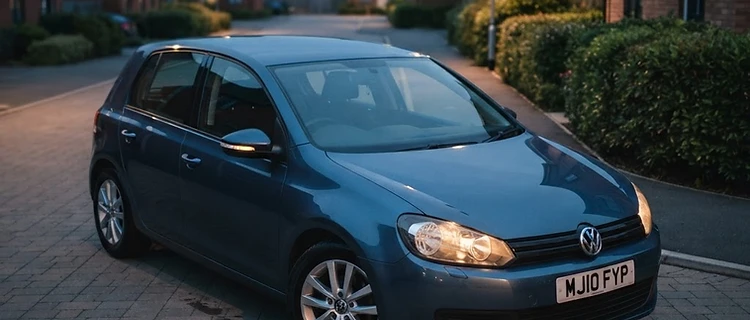
Used Volkswagen Golf Mk6 (2008–2013) Buyer’s Guide: Reliability, TSI Timing Chain Issues and DSG Gearbox Faults
Introduction
The Mk6 Volkswagen Golf remains one of the safest used-car bets in its class: solid cabin, mature road manners and huge parts availability. But used Volkswagen Golf Mk6 reliability is not the same across the range. Pick the wrong engine or gearbox and a seemingly tidy hatchback can turn into an expensive lesson.
This guide focuses on the cars UK buyers most often consider, with particular attention to Golf Mk6 TSI timing chain failure, DSG gearbox faults VW Golf, real-world running costs and the checks that matter before you buy.
Which Mk6 Golf is the safest buy?
As a used car, the Mk6 Golf is best judged by powertrain rather than trim. Broadly, the simpler cars tend to age better.
For petrol buyers, the naturally aspirated 1.6 is usually the least risky choice. It lacks the low-down punch of the turbocharged TSI engines, but it is mechanically simpler and generally less troublesome. By contrast, early 1.2 TSI and 1.4 TSI units are the cars that most often raise reliability concerns, chiefly because of timing chain and tensioner problems.
Diesel buyers have better odds, provided the car suits the journey pattern. The 1.6 TDI and 2.0 TDI can be durable if they get regular longer runs to keep the DPF healthy. A short-trip urban diesel is a different proposition altogether.
If you are also comparing other Volkswagen Group family cars, our guides to the Used SEAT Leon Mk3 (2013–2020) Buyer’s Guide: Reliability, DSG Mechatronics and Water Ingress and Used Skoda Fabia Mk3 (2014–2021) Buyer’s Guide: Reliability, 1.0 TSI Turbo Issues and DSG Faults show how similar themes appear across the wider group.
TSI engines: where the big risk sits
The headline issue on many Mk6 Golfs is the early TSI timing chain set-up. On affected cars, the chain and tensioner can wear or lose tension, especially if servicing has been poor or the car is repeatedly used for short journeys and cold starts.
The classic warning sign is a rattling noise for a second or two on cold start. Ignore it and you risk the chain jumping teeth, which can cause major internal engine damage. When buyers ask is the VW Golf Mk6 a reliable used car, this is the issue that most changes the answer from yes to no.
The 1.4 TSI deserves particular caution. Not every example fails, and some will already have had updated parts fitted, but history matters more here than on many rivals. A thick file of invoices is worth far more than a polished dashboard.
Also watch for cooling-system issues. Water pump leaks are not unusual, and low coolant warnings should never be shrugged off as a minor irritation. On inspection, look for pinkish staining, a sweet coolant smell or evidence of frequent top-ups.
DSG gearboxes: excellent when healthy, dear when neglected
A good DSG suits the Golf brilliantly. Shifts are quick, fuel economy can be strong and it gives the car a more upmarket feel. The problem is that some owners treat these gearboxes as sealed-for-life units. They are not.
The main concern is the mechatronic unit, the electro-hydraulic brain of the gearbox. VW Golf Mk6 DSG mechatronic unit failure symptoms include jerky pull-away, hesitation when selecting drive or reverse, flashing gear indicators, unexpected selection of neutral and thumps during low-speed shifts.
On a test drive, the gearbox should creep smoothly, swap ratios cleanly and manoeuvre without shuddering. If it feels indecisive in traffic or clunks when warm, walk away unless the price leaves room for proper diagnosis and repair.
Service evidence is crucial. On DSG-equipped cars, look for proof of oil changes at the correct intervals, commonly every 40,000 miles on applicable units. No paperwork usually means no confidence.
Common Faults and Known Issues
- TSI timing chain and tensioner wear: Cold-start rattle, uneven running, engine warning lights. Worst case is catastrophic engine damage. Repair costs vary widely; a preventive chain job may run into four figures, while engine failure is far more.
- DSG mechatronic faults: Hesitation, shuddering, warning lights, limp mode. Repairs are often expensive and can easily reach four figures depending on whether the unit is repaired or replaced.
- Water pump leaks: Coolant loss, smell of antifreeze, temperature fluctuations.
- Door locks and window regulators: Intermittent locking, windows dropping slowly or not sealing properly.
- Damp cabin or water ingress: Check front and rear footwells, especially if the car smells musty.
- Diesel DPF issues: More common on low-mileage town cars. Warning lights, forced regenerations and poor economy are typical clues.
- Suspension wear: Knocks from the front end, worn bushes and tired drop links are not unusual on higher-mileage examples.
Buying Advice
If you want the lowest-risk Mk6 Golf, the simple answer is this: buy on condition, history and powertrain. A looked-after 1.6 petrol or correctly used diesel is usually a safer long-term prospect than a cheap TSI automatic with patchy paperwork.
Avoid cars with:
- cold-start chain rattle
- missing DSG service history
- recurring coolant loss
- warning lights that the seller dismisses as “nothing serious”
- obvious modifications or remaps
Favour cars with detailed invoices, evidence of preventative maintenance and a seller who can explain what has been done and when. Main dealer history is nice; specialist Volkswagen Group history is often just as valuable.
Inspection Checklist
- Start the engine from cold and listen carefully for chain rattle.
- Check idle quality; it should settle quickly and run smoothly.
- Test the DSG in stop-start traffic and during parking manoeuvres.
- Confirm all electrical items work: windows, central locking, mirrors, air-con and infotainment.
- Inspect for coolant stains around the engine bay.
- Check the footwells and boot for dampness.
- Look for uneven tyre wear that may suggest poor alignment or suspension wear.
- On diesels, ask how the car is used; regular motorway miles are a good sign.
- Verify servicing from invoices, not just a stamped book.
Ownership Costs
Golf Mk6 running costs are reasonable by family hatchback standards, but they are highly spec-dependent.
Petrol 1.6 models are usually straightforward to service and insure, though not especially fast. TSI models can be economical when healthy, but one major repair wipes out any fuel saving quickly. Diesels can return strong motorway economy, but only if the DPF system is kept happy.
Road tax varies by engine and CO2 band, so check the individual car rather than assuming. Insurance is typically sensible for mainstream models, but GTD and GTI versions cost more. Routine servicing is widely affordable thanks to strong independent specialist support and plentiful parts.
For broader ownership-cost context, our Used Mercedes-Benz A-Class (W176, 2012–2018) Buyer’s Guide: Reliability, DCT Gearbox Issues and Premium Maintenance Costs shows how rival premium hatchbacks can be dearer to run.
Frequently Asked Questions
Is the Volkswagen Golf Mk6 a reliable used car?
Generally yes, but only with the right engine and gearbox. Simpler petrols and well-used diesels are usually safer bets than early TSI and poorly maintained DSG combinations.
What are the most common problems with the VW Golf Mk6?
Timing chain tensioner issues on TSI petrols, DSG mechatronic faults, water pump leaks, DPF trouble on short-run diesels and minor electrical faults.
Should I avoid the DSG gearbox on a used Golf Mk6?
Not necessarily. A healthy DSG is excellent, but only buy one with proper service evidence and a fault-free test drive.
Which engine is the most reliable in the Golf Mk6?
The naturally aspirated 1.6 petrol is generally the simplest petrol choice. Among diesels, the 1.6 TDI and 2.0 TDI can be robust if used for regular longer journeys.
What should I check during a test drive of a used VW Golf Mk6?
Listen for cold-start rattles, check for smooth gear changes, make sure the engine pulls cleanly and test every electrical function.
Summary
The Mk6 Golf is still a very credible used family hatchback: comfortable, classy enough inside and easy to live with. But reliability is uneven. The cars to approach most carefully are early TSI petrols and any DSG example with weak history.
Buy a well-documented car, inspect it properly and the Golf Mk6 can still make sense. Buy a cheap one on hope alone and it can become far less clever than its reputation suggests.
Should You Get a Professional Vehicle Report?
If you are narrowing down a Golf and want a second opinion, a Professional Vehicle Report from MyCarPilot can help flag model-specific risk areas before you commit. It is a one-off £14.99, built by automotive engineers and specialist AI, and includes a 30-day Buying Companion for follow-up questions. If you are new to the service, the FAQ explains how it works.
Frequently Asked Questions
About this guide: Produced by the MyCarPilot Engineering Team using UK market data, manufacturer technical bulletins and common owner-reported fault patterns. This is general buying guidance and does not replace a professional mechanical inspection.
Get Your Professional Vehicle Report
Before you travel to see any car, get the full picture. MyCarPilot analyses the documents and details you provide, cross-references them with UK model and market data, and tells you what is wrong, what it will cost, what to pay and what to inspect. All for a single payment of £14.99.
Start Your Vehicle ReportRelated Articles


Used Nissan Qashqai (J11, 2014–2021) Buyer’s Guide: Reliability, 1.2 DIG-T Engine Issues and CVT Gearbox Faults

Used Ford Puma (2020–Present) Buyer’s Guide: EcoBoost Reliability, mHEV Battery Issues and Common Faults