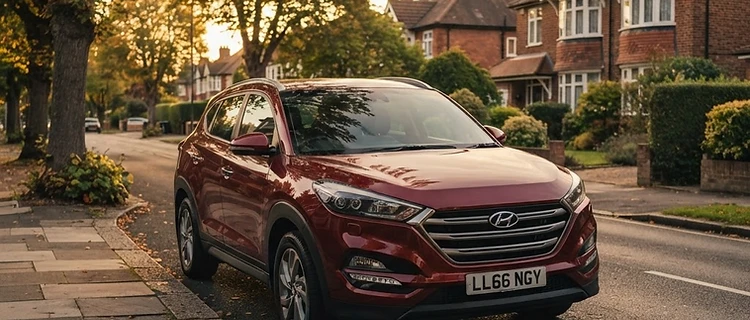
Used Hyundai Tucson (TL, 2015–2020) Buyer’s Guide: Reliability, DCT Gearbox Issues and Clutch Wear
Introduction
The TL-generation Hyundai Tucson is one of the more sensible used family SUVs on the UK market: roomy, easy to drive and usually cheaper than an equivalent Nissan Qashqai or VW Tiguan. The catch is that not all Tucsons are equal. A manual 1.6 GDi can be a very straightforward buy; a poorly maintained 7-speed DCT car can be expensive.
This guide covers what matters most on a used Hyundai Tucson buyer guide UK search: which engine to choose, how serious the DCT gearbox risks really are, and the checks that separate a good car from a money pit.
Which Tucson makes the best used buy?
For most private buyers, the safest all-round choice is the 1.6 GDi petrol with a manual gearbox. It is not quick, but it is mechanically simple, uses a timing chain rather than a belt, and avoids the diesel's DPF concerns and the DCT's clutch wear risk.
The 1.7 CRDi diesel is common and makes sense for regular motorway mileage. It is generally durable, but short-trip use can lead to DPF trouble, EGR contamination and more frequent regeneration. If the car has lived an urban life, walk away from any example that idles unevenly, smokes, or feels flat above 2,000rpm.
The 1.6 T-GDi offers stronger performance, but many UK cars are paired with the 7-speed DCT. That combination is pleasant when healthy, yet it is also the one that needs the closest inspection.
If you are cross-shopping rivals, our guides to the Used Nissan Qashqai J11 (2014–2021) Buyer’s Guide and Used Volkswagen Golf Mk7 (2012–2020) Buyer’s Guide show how the Tucson compares on drivetrain risk.
DCT gearbox reliability: the big issue
The Tucson's weak spot is the 7-speed dual-clutch transmission. As with other dry-clutch DCT systems, it dislikes repeated stop-start crawling, hill-holding on the throttle and lots of low-speed manoeuvring. That accelerates clutch wear and can overheat the unit.
On a test drive, look for:
- shudder pulling away
- hesitation before drive engages
- jerky 1st-2nd changes
- warning lights or a gearbox overheating message
- a hot, acrid smell after town driving
A healthy DCT should feel smooth and decisive. Some slight low-speed awkwardness is normal for this type of gearbox, but repeated shunt, slip or delay is not. If the seller says "they all do that", be cautious.
Buyers researching used Hyundai Tucson clutch replacement cost should budget for a four-figure bill if the DCT clutch pack is worn. Exact UK pricing varies too much by dealer, specialist and parts source to quote one definitive figure, but it is not a minor repair. If actuator or mechatronic-related work is also needed, costs rise again.
In simple terms: manual Tucsons are usually the safer used buy.
Reliability beyond the gearbox
Away from the DCT, the Tucson TL is generally solid. Cabin trim wears well, suspension is robust enough for British roads, and major engine failures are not common when servicing has been done on time.
Still, there are a few recurring themes from owner reports on forums such as Hyundai Owners Club UK and feedback collected by sites like Honest John:
- diesel cars used for short trips can suffer DPF and EGR issues
- panoramic roof cars can develop blocked drains or water leaks
- electronic parking brake faults do crop up, sometimes linked to sticking rear brakes or warning messages
- batteries on lightly used cars can weaken surprisingly quickly, causing odd electrical faults
Also check recall history carefully. UK cars in this era were affected by notable campaigns including the ABS module recall and bonnet latch issues. Use the registration and VIN to confirm recall completion before you buy.
Common Faults and Known Issues
- DCT clutch wear: Shudder, slip, delayed take-up, overheating warnings. Expensive if ignored.
- 1.7 CRDi diesel issues: DPF blockage, failed regens, EGR soot build-up, especially on town-driven cars.
- Panoramic roof leak: Damp headlining, wet carpets, musty smell. Often caused by blocked drains or poor sealing.
- Electronic parking brake problems: Warning lights, dragging rear brakes, poor release.
- ABS recall-related concern: Confirm recall work has been completed.
- Suspension knocks: Usually drop links or bushes rather than anything catastrophic.
- Air-con weakness: Often just a regas, but check it blows properly cold.
Buying Advice
Prioritise history, not just mileage. A 90,000-mile manual diesel with consistent servicing can be a better bet than a 45,000-mile DCT car used only in town.
Best bets:
- 1.6 GDi manual for low annual mileage
- 1.7 CRDi manual for regular long-distance use
Approach with caution:
- any DCT car with patchy history
- diesel cars that have done only school-run duty
- panoramic roof cars with any sign of damp
Ask for invoices, not just a stamped book. Evidence of gearbox software updates, brake work and routine servicing matters. If you are looking at other transmission-sensitive used cars, our Used Skoda Octavia (2013-2019) Buyer’s Guide is a useful benchmark for what good gearbox maintenance records look like.
Inspection Checklist
- Start from cold and listen for rattles or smoky exhaust
- On DCT cars, test repeated pull-aways, reverse and hill starts
- Check for clutch shudder in traffic-speed driving
- Inspect for damp in the boot, rear footwells and around the panoramic roof
- Confirm air-con, parking brake and all driver aids work properly
- Look for uneven tyre wear that could suggest alignment or suspension wear
- Check service history, recall completion and MOT advisories
- Scan the dash for engine, ABS or transmission warning lights
Ownership Costs
The Tucson is not especially cheap to run, but it is predictable. The 1.6 GDi petrol is usually the simplest ownership proposition, though not the most economical. The 1.7 CRDi can return strong motorway mpg, but only if used as intended.
Road tax depends on registration date and version, so verify the exact car rather than assuming. Insurance is typically reasonable for a family SUV, and routine servicing costs are usually modest by class standards. What can upset the maths is DCT repair work, neglected diesel emissions systems or water ingress on poorly kept cars.
Frequently Asked Questions
Is the 2015-2020 Hyundai Tucson a reliable used car?
Generally yes, especially manual cars. Reliability depends heavily on transmission choice and maintenance history.
What are the common gearbox problems on a used Hyundai Tucson?
On 7-speed DCT models, look for clutch shudder, delayed engagement, overheating in traffic and jerky low-speed shifts.
Which engine is best in the 2015-2020 Hyundai Tucson?
For most buyers, the 1.6 GDi petrol is the simpler, safer choice. The 1.7 CRDi suits higher-mileage motorway use.
Does the Hyundai Tucson TL have a timing belt or chain?
Most engines in this generation, including the 1.6 GDi, 1.6 T-GDi and 1.7 CRDi, use a timing chain.
Are there recalls I should know about for the 2016-2018 Tucson?
Yes. Check for completion of ABS module and bonnet latch recall work using the VIN.
Summary
So, is a used Hyundai Tucson worth buying? Yes, provided you buy selectively. The Tucson TL is spacious, generally dependable and good value in the used market, but the gap between a good one and a bad one is mostly defined by the gearbox.
If you want the low-risk option, choose a manual, buy on condition and history, and be wary of neglected diesel or DCT examples.
Should You Get a Professional Vehicle Report?
If you are down to a specific car, a Professional Vehicle Report from MyCarPilot can help you sense-check the risk before you commit. It costs £14.99 as a one-off payment and is built by automotive engineers, powered by specialist AI and cross-referenced with UK model and market data. You also get a 30-day Buying Companion for follow-up questions. For more on how it works, see the FAQ.
Frequently Asked Questions
About this guide: Produced by the MyCarPilot Engineering Team using UK market data, manufacturer technical bulletins and common owner-reported fault patterns. This is general buying guidance and does not replace a professional mechanical inspection.
Get Your Professional Vehicle Report
Before you travel to see any car, get the full picture. MyCarPilot analyses the documents and details you provide, cross-references them with UK model and market data, and tells you what is wrong, what it will cost, what to pay and what to inspect. All for a single payment of £14.99.
Start Your Vehicle ReportRelated Articles

Used Honda CR-V (Mk4, 2012–2018) Buyer’s Guide: Reliability, i-DTEC Diesel DPF Issues and Common Faults

Used Kia Picanto (JA, 2017–2023) Buyer’s Guide: Reliability, AMT Gearbox Quirks and Common Electrical Faults