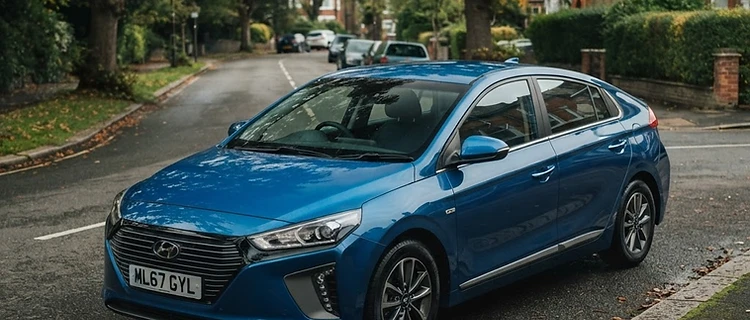
Used Hyundai Ioniq (2017–2022) Buyer’s Guide: Reliability, 12V Battery Issues and Hybrid System Health
Introduction
The Hyundai Ioniq is one of the smartest used hybrid buys in the UK: efficient, roomy enough for family use and usually cheaper than an equivalent Toyota Prius. But a good reputation is not the same as a clean bill of health. If you're researching a used Hyundai Ioniq buyer's guide, the key questions are simple: is it reliable, are the 12V battery complaints a deal-breaker, and how do you judge hybrid system health on a used car?
This guide covers the 2017–2022 Ioniq Hybrid and Plug-in Hybrid, with a focus on the faults UK buyers actually encounter, what to inspect before purchase, and which version makes most sense.
Hybrid reliability and what makes the Ioniq different
In broad terms, Hyundai Ioniq hybrid reliability is strong. The drivetrain is well proven, the 1.6-litre petrol engine is typically durable, and the car avoids many of the expensive diesel-era problems that still haunt used family hatchbacks. It also tends to age well inside, provided it has not been used hard as a private hire car.
The Ioniq's character differs from a Prius because Hyundai chose a six-speed Dual-Clutch Transmission (DCT) rather than a CVT. On the move, that gives it a more conventional feel and better motorway refinement. In town, though, it can be slightly hesitant during low-speed manoeuvres or in stop-start traffic. That does not automatically mean a fault; some driveline shunt is simply part of the design.
If you're also comparing mainstream alternatives, the Kia Niro shares much of its mechanical package, while the Prius remains the benchmark for ultra-smooth hybrid operation. Buyers worried about small-car battery issues may also find our Used Toyota Yaris (Mk4, 2020–Present) Buyer’s Guide: 12V Battery Drain, Hybrid Reliability and Real-World MPG useful.
Hybrid vs Plug-in Hybrid: which used Ioniq suits you?
The standard Hybrid HEV is the safer all-round recommendation for most UK buyers. It works brilliantly if you cannot charge at home and want dependable, fuss-free economy. In mixed driving, many owners report very strong mpg, especially in town and on A-roads, though exact figures vary too much by route and weather to quote one number as universal.
The Hyundai Ioniq hybrid vs plug-in hybrid decision comes down to routine. The Plug-in Hybrid makes sense if your commute is short and you will charge regularly. If not, you're carrying extra weight and complexity without using the main benefit.
On a used example, check that the charging cable is present, the charge flap works properly and the car accepts a charge without warning messages. A neglected PHEV is not necessarily unreliable, but it is easier to buy the wrong one if the previous owner rarely plugged it in.
12V battery drain, DCT behaviour and battery health checks
The issue that comes up most often in any discussion of used Hyundai Ioniq common faults is the small 12V battery. Early cars in particular developed a reputation for going flat unexpectedly. Symptoms include a non-start condition, warning lights, intermittent electrical faults or a car that appears dead after being left for a short period.
Not every case is serious. Sometimes the cure is as simple as a tired 12V battery, software updates or addressing a parasitic drain. But repeated discharge can mask a deeper electrical fault, so do not accept "they all do that" as an answer.
For buyers asking how to check hybrid battery health on used Hyundai Ioniq, the high-voltage battery needs a more methodical approach. A dealer diagnostic printout is best. An independent hybrid specialist may also be able to provide a state-of-health reading using suitable diagnostic equipment. During a test drive, watch for smooth transitions between petrol and electric power, stable charge behaviour and no hybrid warning lights. A battery that charges and discharges erratically deserves further investigation.
As for Hyundai Ioniq DCT gearbox reliability, the transmission is generally dependable if serviced properly, but it is not as creamy at crawling speeds as Toyota's setup. Jerky take-up from cold may be normal; harsh banging into gear, persistent clutch shudder or warning lights are not.
Common Faults and Known Issues
- 12V battery drain: the best-known complaint. Budget roughly £100–£200 for a replacement auxiliary battery, but diagnosis of an underlying drain will add labour.
- Infotainment glitches: frozen screens, Bluetooth pairing issues or reversing camera faults. Often software-related, sometimes fixed by updates.
- DCT hesitation or shunt: mild low-speed hesitation can be characteristic; heavy judder, clutch slip or gearbox warnings are not. Repair costs vary widely and can be substantial if clutch or actuator work is needed.
- Brake corrosion on low-mileage cars: common on hybrids used gently. Pulsation or noisy braking after standing is worth checking.
- Suspension knocks: worn drop links or bushes are not unusual with age and UK roads.
- Charging issues on PHEV: damaged cables, sticky charge flaps or refusal to charge should be investigated before money changes hands.
Reliable UK-wide failure-rate data for each fault is limited, so treat anecdotal forum reports with caution. Use them as prompts for inspection, not proof every car is affected.
Buying Advice
A full service history matters more than badge age here. Look for evidence of routine maintenance, software updates and gearbox servicing where applicable. If the seller cannot explain the car's past use, be cautious with ex-taxi or high-mileage examples unless the condition and paperwork are excellent.
Do not fear mileage on condition alone. If you're asking is the Hyundai Ioniq reliable for high mileage, the answer is often yes, provided it has been serviced correctly and drives cleanly. A tidy 120,000-mile car with proper history can be a better bet than a neglected 50,000-mile one.
Also compare it with sister and rival cars. Our Used Kia Sportage (Mk4, 2016–2021) Buyer’s Guide: Reliability, DCT Clutch Shudder and CRDi Diesel DPF Faults explains similar DCT ownership considerations, while our Used Honda Civic (Mk10 FK/FC, 2017–2022) Buyer’s Guide: Reliability, 1.0 VTEC Turbo Wet Belt Issues and Air-Con Faults is useful if you're torn between hybrid efficiency and a conventional petrol hatch.
Inspection Checklist
- Start the car from cold and check for warning lights.
- Confirm the 12V system behaves normally after the car has been standing.
- Test all infotainment, Bluetooth, camera and USB functions.
- Drive in slow traffic and on open roads; feel for gearbox shunt, clutch judder or hesitation.
- Check brake discs for heavy corrosion and feel for vibration under braking.
- Listen for suspension knocks over potholes and speed humps.
- On PHEV models, verify the charging cable, charge flap and actual charging function.
- Inspect tyres for even wear and check MOT history for repeated advisories. DVSA MOT data can reveal patterns the seller will not mention.
- Ask for servicing invoices, not just a stamped book.
Ownership Costs
The Ioniq's appeal is low running costs. Fuel economy is usually excellent by family hatchback standards, especially for the HEV in urban use. Servicing is generally reasonable in UK terms, though hybrid specialists and main dealers may charge more for diagnostic work. Insurance is usually sensible rather than cheap-cheap.
Road tax depends on registration date and version, so verify the specific car rather than relying on adverts. Tyres, brakes and routine servicing are broadly conventional. In other words, this is a good example of buying a used hybrid car UK buyers need not fear, provided the battery and electrical systems check out.
If you want context on wider ownership budgeting, our guides to the Used Peugeot 3008 (Mk2, 2016–2023) Buyer’s Guide: Reliability, EAT6 Automatic Gearbox Shudder and Common Electrical Faults and Used Ford Puma (2020–Present) Buyer’s Guide: EcoBoost Reliability, mHEV Battery Issues and Common Faults show how hybrid and electrified alternatives can differ on maintenance risk.
Frequently Asked Questions
Is the Hyundai Ioniq a reliable used car?
Yes, generally. It has a solid reputation, but early cars are known for occasional 12V battery and minor electrical issues.
What are the most common problems with the 2017–2022 Hyundai Ioniq?
The most reported issues are 12V battery drain, infotainment glitches and occasional DCT hesitation at low speed.
How do I check the hybrid battery health on a used Ioniq?
Ideally with a dealer or specialist diagnostic report showing battery condition. A road test and absence of warning lights are helpful, but not enough on their own.
Should I buy the Hybrid or Plug-in Hybrid Ioniq?
Choose the Hybrid if you cannot charge at home. Choose the PHEV if you do regular short trips and will charge it consistently.
Does the Hyundai Ioniq have a reliable automatic gearbox?
Usually yes, but it uses a DCT rather than a CVT, so low-speed smoothness is not as polished as a Prius. Check for shudder or warning lights.
Summary
The used Hyundai Ioniq is a convincing, sensible hybrid hatchback with low running costs and generally strong reliability. Its weak spots are well known rather than catastrophic: mainly the 12V battery, minor electrical glitches and the occasionally awkward nature of its DCT at low speed.
Buy on history, condition and diagnostic evidence, not just price. For many UK buyers, the standard Hybrid is the sweet spot.
Should You Get a Professional Vehicle Report?
If you're close to buying, a Professional Vehicle Report from MyCarPilot can help you sense-check the car before you commit. It costs £14.99 as a one-off payment and combines specialist AI with UK model and market data, plus a 30-day Buying Companion for follow-up questions. For more on how it works, see the FAQ. On a hybrid where battery health, gearbox behaviour and past use matter, that extra layer of scrutiny can be money well spent.
Frequently Asked Questions
About this guide: Produced by the MyCarPilot Engineering Team using UK market data, manufacturer technical bulletins and common owner-reported fault patterns. This is general buying guidance and does not replace a professional mechanical inspection.
Get Your Professional Vehicle Report
Before you travel to see any car, get the full picture. MyCarPilot analyses the documents and details you provide, cross-references them with UK model and market data, and tells you what is wrong, what it will cost, what to pay and what to inspect. All for a single payment of £14.99.
Start Your Vehicle ReportRelated Articles


Used Volkswagen Polo (Mk5 Facelift, 2014–2017) Buyer’s Guide: Reliability, 1.2 TSI Timing Issues and DSG Gearbox Faults


Used Toyota Yaris (XP130, 2011–2020) Buyer’s Guide: Reliability, Hybrid Battery Health and Common Faults