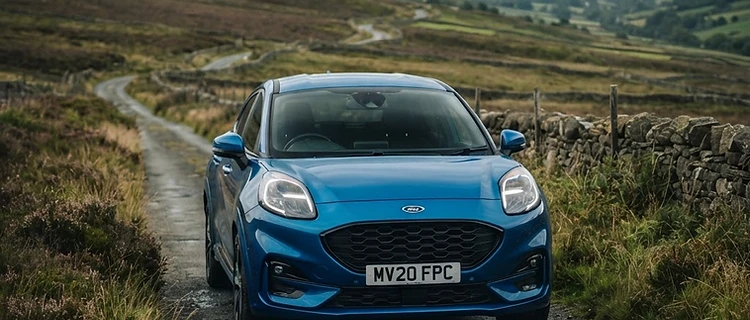
Used Ford Puma (2020–Present) Buyer’s Guide: EcoBoost Reliability, mHEV Battery Issues and Common Faults
Introduction
The Ford Puma has been one of the UK’s most convincing small SUVs: sharp to drive, cleverly packaged and easy to recommend on a quick test drive. As a used buy, though, it deserves a closer look. This used ford puma buying guide covers real-world reliability, the truth about the EcoBoost timing setup, common mHEV issues and the checks worth making before money changes hands.
Why the Puma is popular
Launched in 2020, the Puma turned Ford’s Fiesta-based underpinnings into a B-segment crossover that feels more polished than many rivals. The headline feature is the 456-litre boot, helped by the washable MegaBox underfloor well. For families, dog owners and anyone downsizing from a hatchback, that practicality matters.
Most UK cars use Ford’s 1.0-litre three-cylinder EcoBoost petrol, either as a regular engine or with 48V mild-hybrid assistance. In practice, the mHEV versions feel a little stronger at low revs and are the ones most buyers seek out. ST-Line and ST-Line X trims are especially common and generally the sweet spot for equipment and resale.
If you are also weighing up alternatives, our guides to the Used Toyota Yaris (Mk4, 2020–Present) Buyer’s Guide: 12V Battery Drain, Hybrid Reliability and Real-World MPG and Used Nissan Juke (F15, 2010–2019) Buyer’s Guide: Reliability, CVT Gearbox Issues and Common Faults provide useful context.
Engines, gearboxs and the wet belt question
The key mechanical question buyers ask is simple: does the Ford Puma have the infamous EcoBoost wet belt?
The answer is nuanced. The Puma’s later-generation 1.0 EcoBoost uses a timing chain, not the earlier cam belt-in-oil setup that worried owners of some older Ford models. So if you are asking, ford puma 1.0 ecoboost timing chain or wet belt, the cam drive itself is chain-driven.
However, the engine still uses a wet belt for the oil pump, running in engine oil. That means correct servicing remains vital. Annual oil changes with the exact Ford-spec oil are not optional on these engines; they are part of preserving long-term reliability.
Manual gearboxes are usually the safer used choice. The automatic is a seven-speed dual-clutch unit and can feel hesitant or jerky at parking speeds. Not every car is troublesome, but if you are concerned about ford puma automatic gearbox problems, a careful road test matters. Ford’s older PowerShift reputation still hangs over the brand, as covered in our Used Ford Kuga Mk2 (2012–2019) Buyer’s Guide: Reliability, PowerShift Issues and Common Faults, even though the Puma uses a different transmission.
Ford Puma reliability UK: what owners report
So, is the Ford Puma reliable second hand? Broadly, yes, but with caveats. UK reliability data tends to place it around the middle of the small SUV class rather than at the very top. Mechanically, the Puma is generally sound if maintained properly. The weaker areas are usually electronics, sensors and the 48V mild-hybrid system rather than catastrophic engine failures.
The most commonly reported ford puma mhev issues involve battery state-of-charge warnings, stop-start becoming unavailable and occasional electrical gremlins in colder weather. Some cars recover after a full charge or software update; others need further diagnosis of the 48V battery, battery monitoring system or associated wiring.
SYNC infotainment can also freeze or reboot, though this is more nuisance than deal-breaker. Build quality is decent rather than exceptional: listen for trim rattles, check the reversing camera if fitted and make sure all USB ports, climate controls and the digital instrument display work properly.
Common Faults and Known Issues
Here are the main ford puma common problems to watch for on UK cars:
- 48V mHEV battery warnings: stop-start unavailable, hybrid fault messages or sluggish restarting. Often seen in winter or on lightly used cars. Costs vary widely; some cases are software-related, while battery or module replacement can be much dearer.
- Coolant bypass valve issues: symptoms can include rising temperature, warning lights or poor heater performance. Left unresolved, overheating risk increases.
- Jerky dual-clutch automatic response: hesitation when pulling away, low-speed shunt or abrupt shifts. A software update may help, but persistent issues need dealer-level diagnosis.
- SYNC 3 glitches: frozen screen, failed phone pairing or a reversing camera image not loading correctly.
- 12V battery weakness: many modern cars are sensitive to low voltage, and the Puma is no exception. A tired battery can trigger a surprising range of warning lights.
- Recalls: check for early 2020 action on 48V battery terminal connections, driver airbag retention springs and eCall software updates via the DVSA database or a Ford dealer.
Hard repair-cost figures vary too much by region and dealer to quote confidently, but expect electrical diagnosis and software work to be cheaper than gearbox or hybrid hardware repairs.
Buying Advice
The best used Puma for most buyers is the 1.0 EcoBoost mHEV 155 in ST-Line or ST-Line X trim. It is usefully brisk, often returns more than 50mpg in mixed driving if driven sensibly, and usually has the strongest used-market appeal.
Prioritise history over mileage. A 60,000-mile car with annual Ford-spec oil changes is usually a better bet than a low-mileage example that has missed services. Because of the oil-pump wet belt, I would be wary of any car with patchy maintenance, unknown oil grade or long service gaps.
If you want lowest risk, choose a manual. If you want the automatic, buy only after a thorough mixed-route test drive and proof of software updates where applicable. Also compare with rivals such as the Used Honda Jazz Mk3 (2015–2020) Buyer’s Guide: Reliability, Starter Motor Faults and Fuel Pump Recalls if outright dependability matters more than driver appeal.
Inspection Checklist
- Confirm full service history, ideally annual rather than mileage-only servicing.
- Check invoices for the correct Ford-spec engine oil.
- Start from cold and watch for warning lights, rough idle or excessive vibration.
- On mHEV cars, confirm stop-start and charging functions operate normally once warm.
- On automatics, test low-speed manoeuvres, hill starts and multi-point turns for hesitation.
- Check coolant level and look for signs of overheating or sweet smells from the engine bay.
- Test SYNC screen, Bluetooth, camera, sensors, heated items and digital dials.
- Inspect tyres for even wear; inner-edge wear can hint at alignment issues or kerb damage.
- Verify recall work and ask the seller for dealer printouts if possible.
- Make sure the MegaBox area is dry and free from damage or lingering damp smells.
Ownership Costs
The Puma is not usually expensive to run by modern small-SUV standards. Real-world economy for the 1.0 mHEV often lands around the high-40s to low-50s mpg, depending on use. Insurance is generally reasonable, though ST-Line X models can cost more. Road tax depends on first registration and list price, so check the specific car rather than assuming.
Routine servicing should be manageable, but skipping maintenance is false economy on any EcoBoost. Tyres are affordable in standard sizes, while larger wheels on sportier trims can raise replacement costs and worsen ride quality.
Frequently Asked Questions
Does the Ford Puma have the infamous EcoBoost wet belt?
Not for the timing drive. The Puma uses a timing chain, but the oil pump is still driven by a wet belt, so correct oil and annual servicing remain crucial.
What are the most common problems with a used Ford Puma?
The main ones are 48V mild-hybrid battery warnings, stop-start faults, coolant bypass valve issues, jerky automatic responses and minor SYNC infotainment glitches.
How reliable is a used Ford Puma?
It is generally average to slightly below the class best in UK reliability terms. Good servicing is the difference between a dependable car and a troublesome one.
Which engine and trim is the best buy?
For most UK buyers, the 1.0 EcoBoost mHEV 155 in ST-Line or ST-Line X trim is the sweet spot.
What safety recalls should I check?
Look for completed recall work relating to 48V battery terminal connections, airbag retention springs and eCall software updates.
Summary
The Puma remains one of the best small SUVs to drive and one of the most practical. It is not flawless, though. The big watchpoints are mHEV battery behaviour, minor electrical faults and making sure the EcoBoost has been serviced correctly with the right oil. Buy carefully and it can be a smart, likeable used car.
Should You Get a Professional Vehicle Report?
If a Puma looks promising but you want an extra layer of scrutiny, MyCarPilot offers a data-led Professional Vehicle Report for £14.99. It is built by automotive engineers, powered by specialist AI and cross-referenced with UK model and market data, with a 30-day Buying Companion for follow-up questions. For process questions, see the FAQ. On a car where history and known faults matter, that can be money well spent.
Frequently Asked Questions
About this guide: Produced by the MyCarPilot Engineering Team using UK market data, manufacturer technical bulletins and common owner-reported fault patterns. This is general buying guidance and does not replace a professional mechanical inspection.
Get Your Professional Vehicle Report
Before you travel to see any car, get the full picture. MyCarPilot analyses the documents and details you provide, cross-references them with UK model and market data, and tells you what is wrong, what it will cost, what to pay and what to inspect. All for a single payment of £14.99.
Start Your Vehicle ReportRelated Articles


Used Nissan Qashqai (J11, 2014–2021) Buyer’s Guide: Reliability, 1.2 DIG-T Engine Issues and CVT Gearbox Faults


Used Volkswagen Golf Mk6 (2008–2013) Buyer’s Guide: Reliability, TSI Timing Chain Issues and DSG Gearbox Faults