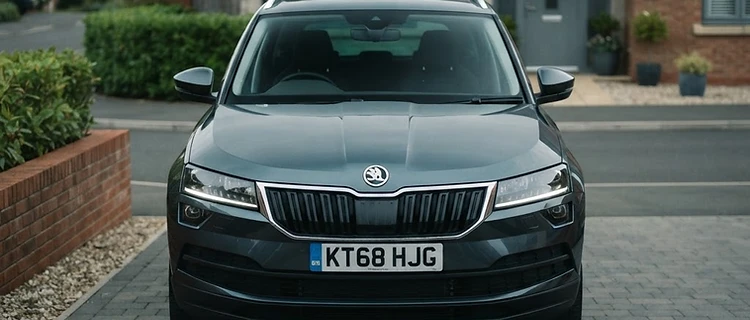
Used Skoda Karoq (2017–2024) Buyer’s Guide: Reliability, 1.5 TSI ‘Kangarooing’ and DSG Maintenance
Introduction
The Skoda Karoq is one of the most sensible used family SUVs on the UK market. It is roomy, easy to place, generally well built and, in SE Technology trim, usually has the equipment most buyers actually want. Better still, it sits on Volkswagen Group’s MQB platform, so parts supply and specialist knowledge are strong.
This used skoda karoq buyer's guide focuses on what matters when money is on the line: real-world reliability, the early 1.5 TSI 'kangarooing' problem, DSG maintenance, common faults and likely ownership costs.
Reliability, engines and the best used Karoq
In broad terms, skoda karoq reliability uk is strong. The Karoq avoids many of the electrical gremlins and trim-quality disappointments that affect some rivals, and it feels more robust than many fashion-led crossovers.
For most buyers, the 1.5 TSI 150 petrol is the sweet spot. It is smooth, quiet and strong enough for a loaded family car. If you do mainly town work and modest annual mileage, it is the one to buy.
The 2.0 TDI 150 suits motorway drivers better. It pulls well, returns stronger long-run economy and is the better tow car, but diesel emissions hardware means neglected examples can become expensive.
The 1.0 TSI is usable, but in a Karoq it can feel a little stretched when fully loaded. It makes sense only if price, insurance and lower annual mileage matter more than performance.
Trim-wise, SE Technology is often the smart buy. It usually delivers the best value without the larger wheels that can make higher-spec cars ride more firmly. If you find a car with the VarioFlex seating system, that is worth having for flexibility alone.
1.5 TSI 'kangarooing' and DSG servicing
The best-known of the skoda karoq 1.5 tsi engine problems is the cold-start hesitation nicknamed 'kangarooing'. Early 1.5 TSI EVO cars, mainly from 2017 to 2019, could jerk or hesitate when pulling away gently from cold. It was irritating rather than catastrophic, but it could make a car feel poorly calibrated.
The good news is that most affected cars were updated by Skoda with revised engine software. On a test drive, start the car from cold if possible. If it stumbles, surges or feels awkward at low revs in first or second, ask for proof of the software campaign. A clean bill of health in the history is far more reassuring than a seller saying, 'they all do that'.
Then there is the DSG. The Karoq’s Direct-Shift Gearbox is usually pleasant and efficient, but service history matters. Many wet-clutch DSG units need an oil and filter service every 40,000 miles. Some lower-torque DSGs have different requirements, so check the exact gearbox fitted rather than relying on assumption. If a seller cannot show invoices or digital history, budget for a transmission service immediately.
On the move, a healthy DSG should shift cleanly, creep smoothly in traffic and engage drive or reverse without a thump. Jerky parking-speed manoeuvres, delayed take-up or shuddering deserve closer investigation. For broader context on shared VW Group issues, see our Used Volkswagen Golf Mk7 (2012–2020) Buyer’s Guide: Reliability, Water Pump Leaks and DSG Faults and Used Audi A3 (8V, 2012–2020) Buyer’s Guide: Reliability, DSG Faults and Water Pump Issues.
Common Faults and Known Issues
These are the skoda karoq common faults worth checking for:
- 1.5 TSI kangarooing: Cold hesitation on early cars. Usually fixed with software.
- Water pump and thermostat housing leaks: Not unique to the Karoq, but common enough across MQB petrol models. Look for coolant loss, pink residue or a sweet smell after a drive. A skoda karoq water pump replacement cost uk is typically around £450 to £800 at an independent specialist, often more at a main dealer.
- DSG neglect: Missed servicing can lead to poor shift quality and expensive wear.
- Suspension knocks: Anti-roll-bar links and bushes can wear, especially on heavier diesel cars or those used on poor roads.
- Brake wear and corrosion: Cars used lightly may show rusty discs or sticky rear brakes.
- Infotainment glitches: Frozen screens, failed Bluetooth pairing or intermittent reversing camera operation are usually software-related, but check everything works.
- Diesel EGR/DPF issues: Mostly on short-trip cars. Warning lights, repeated regeneration attempts or limp mode are red flags.
Buying Advice
If you want the safest all-round used buy, look for a facelift-era car with the 1.5 TSI and a full history, or a well-maintained 2.0 TDI if you do serious motorway mileage.
The best year for used skoda karoq value is often 2020 or 2021: old enough to avoid the steepest depreciation, new enough that many early software issues are behind them.
I would prioritise condition and maintenance over trim. A cared-for SE Technology is a better purchase than a neglected SportLine. Likewise, do not dismiss a manual if you are worried about long-term automatic costs.
Against a SEAT Ateca, the Karoq usually feels slightly more comfort-led and family-focused. Used reliability is broadly similar because both share much of their engineering, so history and inspection matter more than badge choice.
Inspection Checklist
- Start from cold and check for 1.5 TSI hesitation or uneven idle.
- Confirm DSG servicing with invoices, not verbal promises.
- Check for coolant loss, staining or a recent water pump replacement.
- Listen for suspension knocks over speed humps and broken surfaces.
- Inspect all four tyres for even wear; inner-edge wear can hint at alignment issues.
- Test infotainment, navigation, parking sensors, camera and both keys.
- On diesels, ask about DPF use pattern; frequent short trips are not ideal.
- Check the boot floor, seat mechanisms and VarioFlex operation if fitted.
- Verify digital service history with a Skoda dealer if the record looks incomplete.
Ownership Costs
The Karoq is not a bargain-basement SUV to run, but skoda karoq ownership costs are usually sensible.
A 1.5 TSI can return around the low-to-mid 40s mpg in mixed real use; a 2.0 TDI can better that on motorway runs. Exact figures depend heavily on wheel size, gearbox and driving style.
Insurance is typically moderate for the class. Servicing at an independent VAG specialist is usually reasonable, though DSG work and cooling-system repairs can lift bills quickly. Budget roughly £250 to £400 for routine annual servicing, more for major work. Road tax depends on registration date and original list price, so check the specific car rather than guessing.
Cambelt-wise, diesel Karoqs should have replacement timing recorded in line with Skoda UK guidance, commonly cited as 5 years or 140,000 miles. On petrol cars, confirm the current schedule with Skoda or a specialist, as manufacturer guidance can vary by engine and year.
Frequently Asked Questions
Is the Skoda Karoq a reliable used car?
Yes. Is a used skoda karoq reliable? Generally, yes. It is one of the more dependable family SUVs, provided the 1.5 TSI software updates are done and the DSG has been maintained correctly.
What is the Karoq 1.5 TSI kangarooing fix?
Usually a Skoda software update for the early 1.5 TSI EVO engine. Ask for proof in the service history.
How often does a Skoda Karoq DSG gearbox need a service?
Many wet-clutch DSG units need servicing every 40,000 miles. Check the exact gearbox fitted, because not every DSG has the same schedule.
Does the Skoda Karoq have a timing chain or belt?
Most Karoq engines used in the UK are belt-driven rather than chain-driven. Always verify the exact engine and service schedule on the car you are buying.
Which is the best engine for a used Skoda Karoq?
For most people, the 1.5 TSI 150 petrol. For high-mileage motorway use, the 2.0 TDI 150 is usually the better fit.
Summary
The used Skoda Karoq is easy to recommend. It is practical, mature to drive and generally dependable, which is why it remains one of the better used mid-size SUVs in Britain.
The key is buying carefully. Check for the early 1.5 TSI software fix, verify DSG maintenance properly, inspect for coolant leaks and do not pay extra for a flashy trim if the history is weak. Buy on condition and evidence, and the Karoq is usually a very sound choice.
Should You Get a Professional Vehicle Report?
If you are narrowing down a Karoq and want an independent second view, MyCarPilot is built for exactly that. A Professional Vehicle Report costs £14.99 as a one-off payment and uses model-specific intelligence, UK market data and specialist AI developed with automotive engineers. You also get a 30-day Buying Companion for follow-up questions. For more on how it works, see the FAQ.
Frequently Asked Questions
About this guide: Produced by the MyCarPilot Engineering Team using UK market data, manufacturer technical bulletins and common owner-reported fault patterns. This is general buying guidance and does not replace a professional mechanical inspection.
Get Your Professional Vehicle Report
Before you travel to see any car, get the full picture. MyCarPilot analyses the documents and details you provide, cross-references them with UK model and market data, and tells you what is wrong, what it will cost, what to pay and what to inspect. All for a single payment of £14.99.
Start Your Vehicle Report