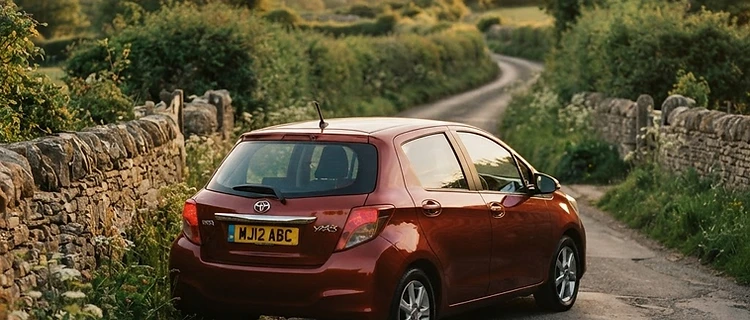
Used Toyota Yaris (XP130, 2011–2020) Buyer’s Guide: Reliability, Hybrid Battery Health and Common Faults
Introduction
The XP130 Toyota Yaris has a strong reputation in the used market for one simple reason: it rarely does anything dramatic, and that is exactly what many buyers want. If you need a dependable supermini for city work, commuting or first-car duties, the Yaris deserves a serious look.
This used Toyota Yaris buyer's guide UK covers the petrol and Hybrid Synergy Drive models sold from 2011 to 2020, including what goes wrong, how reliable the hybrid battery really is, and which versions make the most sense. If you are also weighing up rivals, see our Used Ford Fiesta (Mk7/Mk8, 2008–2017) Buyer’s Guide: Reliability, EcoBoost Wet-Belt Issues and Common Faults and Used Vauxhall Corsa E (2014–2019) Buyer’s Guide: Reliability, IntelliLink Faults and Common Issues.
Which Yaris makes most sense?
In the UK, the core choices are the 1.0 petrol, 1.33 VVT-i petrol and 1.5 VVT-h hybrid. All use a timing chain rather than a belt, which removes one big maintenance worry.
The 1.0 is honest but slow. Fine in town, less so on the motorway. The 1.33 is the better all-rounder, though it can feel flat when loaded up. The hybrid is the standout if most of your driving is urban. It is smooth, cheap to run and usually the easiest XP130 to recommend.
A facelift arrived in 2014, then another major update in 2017. Later cars feel a little smarter inside and often have better safety kit, so a tidy 2017-on car is often the sweet spot. That said, condition and service history matter more than registration year.
Toyota Yaris hybrid reliability UK: what buyers need to know
The Yaris Hybrid uses Toyota Hybrid Synergy Drive with a CVT-style e-CVT transmission. In practice, it is one of the least troublesome hybrid systems on sale. There is no clutch to wear out, and the transmission itself is generally very durable.
The main concern is battery health, not because failures are common, but because buyers worry about them. In reality, plenty of Yaris hybrids cover well over 100,000 miles without major battery trouble. What matters is evidence of proper servicing and, ideally, a recorded Hybrid Health Check.
On a test drive, the warning signs are usually subtle: the petrol engine running almost constantly, the battery gauge swinging rapidly, poor fuel economy, or a noisy battery cooling fan. Also inspect the rear-seat battery air intake area; if it is blocked with fluff or pet hair, battery cooling can suffer.
If the traction battery does eventually need replacement, a main-dealer bill is typically around £1,200 to £2,000 in the UK. That is not pocket change, but it is less frightening than many buyers assume. Toyota’s Relax warranty can also be valuable on used cars if the servicing conditions are met.
Best years, trims and ULEZ compliance
For value, 2014 to 2016 hybrids often look strongest. For the best mix of age, kit and refinement, 2017 to 2020 cars are worth stretching to. Mid-spec trims usually give the nicest balance; top trims add useful kit, but touchscreen condition matters.
Most petrol and hybrid Yaris models from this era are ULEZ compliant, which is a real advantage in London and other clean-air zones. The rare 1.4 D-4D diesel needs more careful checking, especially on earlier cars.
The Yaris was also designed with safety high on the agenda and performed well in Euro NCAP testing for its class, but driver-assistance kit varies by year and trim, so never assume every car has the same equipment.
Common Faults and Known Issues
The XP130 is fundamentally robust, but it is not fault-free.
- 12V battery weakness: Common on lightly used cars, especially hybrids. Symptoms include random warning lights, slow starting of systems and electrical glitches. Usually a straightforward battery replacement.
- Front suspension wear: Early cars can develop knocks from worn bushes or drop links. Listen over speed bumps and broken surfaces.
- Infotainment faults: Freezing screens, poor touch response and failed Bluetooth pairing do crop up. Not always expensive, but annoying.
- 1.33 VVT-i carbon build-up: Cars used only for short trips can develop rough idle or hesitant response. A good service and regular longer runs usually help.
- Brake corrosion: Hybrids use regenerative braking, so friction brakes can get rusty through lack of use. Check for pulsing, grinding or an advisory history.
- CVT driving feel: A droning engine note under hard acceleration is usually normal, not a fault. Jerking, warning lights or refusal to engage drive is not normal.
Repair costs vary widely by area and parts choice, but most Yaris faults are modest compared with problem superminis that suffer timing belt, turbo or dual-clutch failures.
Buying Advice
A used Toyota Yaris 2011-2020 issue is rarely catastrophic; the real risk is buying a neglected example because “it’s a Toyota, so it must be fine”. That is a mistake.
Prioritise full service history, evidence of regular oil changes and, on hybrids, proof of hybrid system checks. A low-mileage car that has sat unused can be worse than a higher-mileage one that has been serviced properly.
For petrol buyers, the 1.33 is sensible if you do mixed driving. For heavy urban use, the hybrid is usually worth the premium. If you mostly do long, fast motorway journeys, the hybrid still works well, but its advantage over a petrol narrows.
Avoid cars with warning lights, patchy service records, poor-quality accident repairs or obvious taxi wear. Check panel gaps, tyre brands and seat bolster condition; they often tell the truth before the seller does.
Inspection Checklist
- Confirm service history and mileage consistency.
- On hybrids, ask for a Hybrid Health Check record.
- Check that the engine starts cleanly and idles smoothly.
- Drive over rough roads for suspension knocks.
- Test the touchscreen, Bluetooth, camera and steering-wheel controls.
- Inspect tyres for even wear; mismatched cheap tyres suggest corners have been cut.
- Check brake discs for heavy corrosion, especially on hybrids.
- Make sure the CVT engages smoothly and there are no warning lights.
- Verify ULEZ status if buying the diesel.
- Look for signs of water ingress in the boot and footwells.
Ownership Costs
Running costs are one of the Yaris’s strongest suits. The 1.0 and 1.33 petrols are usually inexpensive to insure and service. The hybrid is often the cheapest to fuel in real UK use, with many owners seeing roughly 55 to 65mpg if the car is used as intended. Petrol models tend to sit lower, often around the mid-40s to mid-50s mpg depending on engine and use.
Road tax depends heavily on registration date because UK VED rules changed in April 2017, so check the individual car rather than assuming. Servicing is generally straightforward, and the lack of a timing belt helps. Compared with troublesome rivals such as some diesel crossovers or wet-belt turbo superminis, ownership risk is low; see our Used Honda Civic (Mk9, 2012–2017) Buyer’s Guide: Reliability, i-DTEC Diesel Issues and Common Faults for how different the risk profile can be.
Frequently Asked Questions
Is a used Toyota Yaris Hybrid worth it?
Yes, especially for town and suburban driving. It is efficient, usually reliable and avoids many of the expensive faults seen elsewhere.
Is the Toyota Yaris Hybrid reliable after 100,000 miles?
Generally, yes. High mileage is less worrying than poor maintenance, but a Hybrid Health Check is well worth having.
What are the most common Toyota Yaris common faults?
12V battery drain, suspension bush wear, infotainment glitches, brake corrosion on hybrids and occasional carbon build-up on the 1.33 petrol.
How much is a Toyota Yaris hybrid battery replacement cost UK?
Typically around £1,200 to £2,000 from a main dealer. Specialist options may differ.
Does the XP130 Yaris have a timing belt or chain?
It uses a timing chain across the range.
Is the Toyota Yaris ULEZ compliant?
Nearly all petrol and hybrid models are. Double-check the rare diesel.
Summary
The XP130 Yaris is not exciting, but it is one of the safest used bets in the class. The hybrid is the pick for most UK buyers, the 1.33 petrol is a decent alternative, and major mechanical disasters are rare if the car has been serviced properly.
If you want the best year for a used Toyota Yaris UK, start with 2017-on cars, then buy on condition, history and evidence of careful ownership. A clean, well-maintained example should be a dependable small car for years.
Should You Get a Professional Vehicle Report?
If you are close to buying, a second layer of scrutiny is worthwhile. MyCarPilot is the UK’s independent vehicle buying intelligence platform, built by automotive engineers and powered by specialist AI cross-referenced with UK model and market data. A Professional Vehicle Report costs £14.99 as a one-off payment and includes a 30-day Buying Companion for follow-up questions. For more on how it works, see the FAQ.
Frequently Asked Questions
About this guide: Produced by the MyCarPilot Engineering Team using UK market data, manufacturer technical bulletins and common owner-reported fault patterns. This is general buying guidance and does not replace a professional mechanical inspection.
Get Your Professional Vehicle Report
Before you travel to see any car, get the full picture. MyCarPilot analyses the documents and details you provide, cross-references them with UK model and market data, and tells you what is wrong, what it will cost, what to pay and what to inspect. All for a single payment of £14.99.
Start Your Vehicle ReportRelated Articles


Used Nissan Qashqai (J11, 2014–2021) Buyer’s Guide: Reliability, 1.2 DIG-T Engine Issues and CVT Gearbox Faults


Used Volkswagen Golf Mk6 (2008–2013) Buyer’s Guide: Reliability, TSI Timing Chain Issues and DSG Gearbox Faults