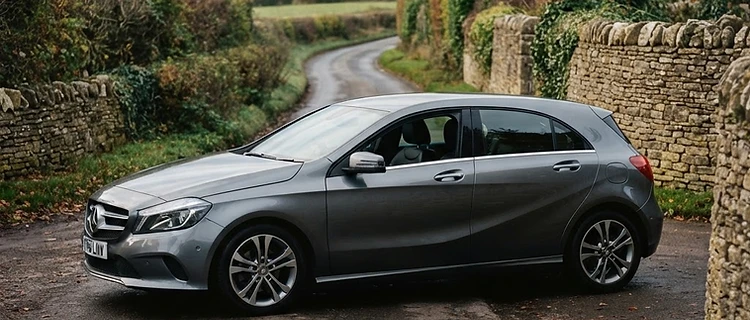
Used Mercedes-Benz A-Class (W176, 2012–2018) Buyer’s Guide: Reliability, DCT Gearbox Issues and Premium Maintenance Costs
Introduction
The W176 Mercedes-Benz A-Class turned the A-Class into a proper premium hatchback: sharper styling, a smarter cabin and strong badge appeal. It still feels more upmarket than many mainstream rivals, but that badge can hide expensive neglect.
If you are researching used Mercedes A-Class W176 reliability, the short version is this: a well-serviced car can be a sound buy, but the wrong one can land you with gearbox, sensor and diesel emissions bills that wipe out any bargain. This guide covers the engines worth targeting, the Mercedes A-Class DCT gearbox problems to watch for, and what ownership really costs in the UK.
Reliability overview: good bones, costly neglect
Mechanically, the W176 is generally solid. It is not a car with one catastrophic design flaw, but it is sensitive to missed maintenance. Service history matters far more here than on a simpler family hatch.
Early cars, especially 2012 to 2014 examples, had more complaints about trim rattles, cabin squeaks and occasional electrical niggles. Later facelift cars feel better screwed together and are usually the safer used bet.
The strongest used buy depends on mileage pattern:
- A180 and A200 petrol suit lower-mileage and urban drivers best.
- A220d is the standout for motorway users wanting strong economy and durability.
- Diesel cars used only for short trips are the ones to treat most cautiously because DPF and emissions issues can follow.
Like rivals covered in our Used Audi A3 (8V, 2012–2020) Buyer’s Guide: Reliability, DSG Faults and Water Pump Issues and Used Volkswagen Golf Mk7 (2012–2020) Buyer’s Guide: Reliability, Water Pump Leaks and DSG Faults, the A-Class rewards careful buying rather than blind brand loyalty.
Engines and gearbox: what to choose, what to avoid
For most UK buyers, the sweet spot is either a petrol A200 or a diesel A220d.
The A220d uses Mercedes’ proven 2.1-litre diesel and is the closest thing in the range to a high-mileage workhorse. It pulls well, feels relaxed on the motorway and usually ages better than smaller diesels if maintained correctly. If you do 12,000 miles a year or more, it is often the sensible choice.
The A180 and A200 petrol models make more sense for mixed use, commuting and town work. They avoid the diesel’s DPF and NOX sensor headaches and are usually the better answer to the question, is a used Mercedes A-Class expensive to run? Not necessarily, provided you avoid neglected automatic cars.
The gearbox deserves special attention. Many W176s use the 7G-DCT dual-clutch automatic. A good one shifts cleanly and suits the car. A neglected one can become hesitant, jerky or clunky at low speed. The key point is simple: it needs a fluid change every 5 years or 46,000 miles. Cars advertised as “full Mercedes history” are not automatically safe; check the invoice trail and confirm the gearbox service was actually done.
If the change has been skipped, rough shifting may only need a service and software update, but repeated neglect can lead to expensive mechatronic or clutch-related work. For context, this is the same pattern we see with other automated transmissions, including in our Used Hyundai Tucson (TL, 2015–2020) Buyer’s Guide: Reliability, DCT Gearbox Issues and Clutch Wear.
Common Faults and Known Issues
Here are the main Mercedes A-Class 2012-2018 common faults worth checking:
- 7G-DCT jerkiness or hesitation: most obvious when parking, pulling away or shifting 1st to 2nd. A gearbox oil service may cost roughly £250 to £400 at an independent specialist; major mechatronic repairs can run into four figures.
- NOX sensor failures on diesels: engine light, reduced economy or emissions warnings. Replacement cost varies, but a bill of several hundred pounds is common.
- DPF trouble on short-run diesels: warning lights, limp mode, frequent fan operation after trips. Cars that never see long motorway runs are highest risk.
- Water pump leaks: coolant smell, low coolant warning or staining around the pump area. Cost depends on engine and labour rate, but this is not usually a tiny bill.
- Interior rattles and trim looseness: common on earlier cars. Annoying rather than terminal, but worth using in negotiation.
- Battery and sensor-related electrical faults: stop-start problems, random warning messages and weak starting can stem from an ageing battery rather than something serious.
- Timing chain wear from poor servicing: W176 engines use a timing chain, not a belt. It is designed to last, but long oil-change intervals or cheap oil can accelerate wear.
Buying Advice
The best-value cars are usually facelift examples with full history, sensible mileage and evidence of preventative maintenance rather than just annual stamps.
Prioritise:
- A documented 7G-DCT service on automatic cars.
- Regular oil changes, ideally more frequent than the absolute maximum interval.
- Diesel cars that have clearly done regular A-road or motorway miles.
- Matching premium-brand tyres and even wear across an axle; cheap mismatched tyres often hint at penny-pinching elsewhere.
Be cautious with:
- Early cars with patchy history.
- Short-trip diesel A-Class models.
- Any seller describing a jerky automatic as “normal for a dual-clutch”. Some low-speed hesitation is typical; harsh thumps and delayed engagement are not.
If you are cross-shopping, the A-Class feels more premium than a Used Volvo V40 (2012–2019) Buyer’s Guide: Reliability, EGR Issues and Common Faults, but usually costs more to put right.
Inspection Checklist
Before buying, check:
- Cold start for rattles, smoke or chain noise.
- Automatic take-up from Drive and Reverse; it should be prompt and smooth.
- Full-throttle acceleration for gearbox flare or hesitation.
- Dashboard for engine, ABS or tyre-pressure warnings.
- Coolant level and signs of leaks.
- Uneven tyre wear, kerbed alloys and suspension knocks.
- Infotainment, Bluetooth, parking sensors and climate control.
- Service invoices, not just a stamped book.
If the screen or media system feels dated, budget carefully: Mercedes A-Class W176 infotainment upgrade costs vary widely depending on whether you want OEM-style integration or aftermarket smartphone mirroring.
Ownership Costs
This is where the premium badge bites. The W176 is not ruinous, but it is rarely cheap.
Expect petrol cars to return roughly low-to-mid 40s mpg in mixed use, while an A220d can manage mid-50s mpg or better on steady runs. Real-world figures depend heavily on wheel size, gearbox and journey type.
Servicing at an independent Mercedes specialist is usually far better value than a main dealer. Budget more than you would for a Ford Focus or Vauxhall Astra, particularly for brakes, tyres and diagnostics. Insurance can also be steep for younger drivers.
Road tax depends on engine, CO2 output and registration date, so check the specific car rather than assuming all W176s cost the same. For many buyers, the bigger cost difference is not tax but whether the car needs gearbox, DPF or emissions work after purchase.
Frequently Asked Questions
Is the Mercedes A-Class W176 a reliable used car?
Generally yes, if it has been serviced properly. Later cars tend to be better than early examples, and neglected automatics or short-run diesels are the biggest risks.
What are the most common problems with the Mercedes A-Class 2012-2018?
Jerky 7G-DCT gearboxes, NOX sensor faults on diesels, DPF issues on low-mileage diesel cars, water pump leaks and interior rattles.
Which engine is best in a used Mercedes A-Class W176?
For long-distance drivers, the A220d is the strongest all-rounder. For town and mixed use, the A180 or A200 petrol is usually the safer ownership bet.
Does the Mercedes A-Class W176 have a timing belt or chain?
It uses a timing chain. Regular oil changes are still important to avoid wear.
Is the 7G-DCT automatic gearbox reliable?
It can be, but only if serviced on time. Missed fluid changes are a red flag.
Summary
A good W176 still makes a classy used hatch. Cabin quality, image and long-distance refinement remain appealing, and the best engines are fundamentally strong. The catch is that the A-Class does not tolerate skipped maintenance, especially where the 7G-DCT, diesel emissions hardware and cooling system are concerned.
If you want the safest used buy, look for a later car with full invoices, a proven gearbox service history and an engine that matches your driving pattern. In simple terms: A220d for mileage, A180 or A200 petrol for lower-use ownership.
Should You Get a Professional Vehicle Report?
On a car like this, a paper service history alone is not enough. A Professional Vehicle Report from MyCarPilot costs £14.99 as a one-off payment and helps you sanity-check model risks, likely trouble spots and whether the car fits your usage. It is built by automotive engineers, powered by specialist AI and backed by a 30-day Buying Companion for follow-up questions. If you are comparing reports or process, the FAQ explains how it works.
Frequently Asked Questions
About this guide: Produced by the MyCarPilot Engineering Team using UK market data, manufacturer technical bulletins and common owner-reported fault patterns. This is general buying guidance and does not replace a professional mechanical inspection.
Get Your Professional Vehicle Report
Before you travel to see any car, get the full picture. MyCarPilot analyses the documents and details you provide, cross-references them with UK model and market data, and tells you what is wrong, what it will cost, what to pay and what to inspect. All for a single payment of £14.99.
Start Your Vehicle Report